

NEW FAYETTEVILLE OFFICE ADDRESS

200 Dick Street, Suite A, Fayetteville, NC 28301

Learn More

New Clients Email

info@carolinalaw.com

Fayetteville Catastrophic Injury Lawyer

A permanent injury turns a claim into a lifetime calculation, and a standard settlement offer rarely covers what that future actually costs. The Fayetteville personal injury attorneys at Maginnis Howard build catastrophic injury cases around what a client will need for decades, working with life care planners and vocational consultants from the start rather than at the end. A catastrophic injury attorney in Fayetteville, NC should be valuing the next 30 years, not the bills already received.

Call our Fayetteville office at (910) 339-6603 for a free consultation.

Fayetteville Catastrophic Injury Guide

What Counts as a Catastrophic Injury in North Carolina?

A catastrophic injury is one that permanently limits what a person can do, which makes the damages far larger than in a routine accident claim. Common examples include:

  • Traumatic brain injury
  • Spinal cord injury
  • Amputation and limb loss
  • Severe burn injury
  • Severe scarring and disfigurement
  • Loss of vision or hearing
  • Multiple traumatic injuries from a single incident

What separates a catastrophic case from an ordinary injury claim is not just the severity of the harm on day one. It is that the injury does not resolve. A claim built around a permanent injury has to account for decades, not for a course of treatment that ends.

maginnis howard logo

What Causes Catastrophic Injuries in Cumberland County?

Fayetteville’s mix of highway traffic, industrial activity, and dense commercial corridors creates several recurring sources of severe injury:

  • High-speed collisions on I-95 and Bragg Boulevard: the most common source of catastrophic injury claims in Cumberland County.
  • Commercial truck wrecks: an 18-wheeler’s weight turns even a moderate impact into a life-altering event for a passenger vehicle.
  • Falls from height: construction sites, warehouses, and multi-story properties create fall risks with lasting consequences.
  • Defective products: equipment failures, faulty vehicle parts, and dangerous consumer products cause sudden injury without warning.
  • Premises hazards: poorly maintained stairwells, inadequate lighting, and unaddressed structural hazards at stores or apartment complexes.

The cause shapes who is legally responsible, which is the first question in any catastrophic injury claim.

The Long Road After a Catastrophic Injury

The first hospital bill is rarely the biggest expense a catastrophically injured person will face. Many clients need ongoing care, assistive equipment, home modifications like wheelchair ramps or widened doorways, and, in some cases, full-time personal care assistance.

Those needs continue for years, and a claim valued against the bills already received leaves most of them unfunded. That gap is the central problem in a catastrophic injury case.

These costs compound with lost earning capacity, since someone who built a career in physical labor may never return to that work. Calculating a lifetime cost takes far more than adding up existing bills.

Who Builds the Financial Picture in a Catastrophic Injury Case?

Three kinds of professionals build the financial picture in a catastrophic injury case. Life care planners project future treatment, equipment, and caregiving costs based on a client’s specific prognosis. Vocational consultants assess how an injury limits the ability to work, and economists calculate the present value of those losses, accounting for inflation.

Maginnis Howard brings these professionals in early, not as an afterthought before trial. Initial offers are often anchored to current bills, and a well-documented life care plan is among the most persuasive evidence available in answering one.

North Carolina Law on Serious and Permanent Injuries

Pursuing serious and permanent injury claims in North Carolina involves several legal principles that shape how these cases are valued and litigated. North Carolina places no statutory cap on compensatory damages, the money that repays what a claim actually costs you, in an ordinary personal injury case. A catastrophically injured claimant can pursue the full value of medical expenses, lost income, and pain and suffering, though narrower rules apply to a small number of claim types we review at intake.

Punitive damages, an additional award meant to punish especially reckless conduct rather than repay a loss, may also be available when a defendant’s conduct rises to the level of willful or wanton behavior, fraud, or malice, under N.C. Gen. Stat. § 1D-15. These damages are ordinarily capped at three times the compensatory damages or $250,000, whichever is greater, under N.C. Gen. Stat. § 1D-25.

Deadlines apply regardless of how severe the injury is. Under N.C. Gen. Stat. § 1-52, most personal injury claims must be filed within three years of the incident. Families who lose a loved one to a catastrophic injury face a shorter window under N.C. Gen. Stat. § 1-53(4), which generally requires a wrongful death claim under N.C. Gen. Stat. § 28A-18-2 to be filed within two years of the date of death.

Maginnis Howard evaluates the full lifetime cost of a catastrophic injury before responding to any offer. Call our Fayetteville office at (910) 339-6603 for a free consultation.

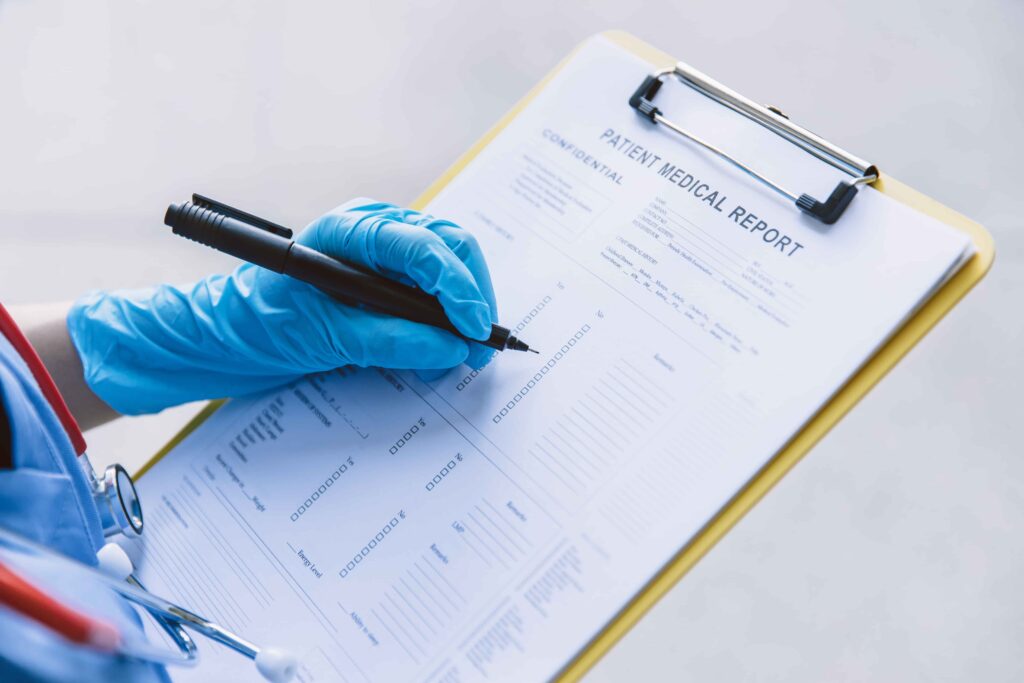
Doctor wearing medical gloves filling out a patient medical report on a clipboard.

When the Injured Person Can't Manage Their Own Settlement

Some catastrophic injuries leave a client unable to manage their own legal or financial affairs, which raises questions a typical injury claim never has to address. When a court formally rules that an adult can no longer manage those affairs, a status called adjudicated incompetent, Chapter 35A of the North Carolina General Statutes governs the appointment of a guardian to manage that person’s estate. That guardian also approves any settlement on the person’s behalf.

Settlements involving minors carry a separate layer of oversight. Under Rule 17 of the North Carolina Rules of Civil Procedure, a minor must appear in a personal injury lawsuit through a guardian ad litem, a person the court appoints to represent the child’s interests, and any settlement reached on a child’s behalf typically requires review and approval by a judge.

That review confirms settlement funds are properly structured or held until the child reaches adulthood. The process adds time, which is one more reason seasoned counsel matters in these cases.

How Catastrophic Injuries Affect the Whole Family

A catastrophic injury rarely affects only the person hurt. Spouses often become full-time caregivers, sometimes leaving their own jobs, and children may lose a parent’s active involvement.

North Carolina law recognizes some of this collateral harm. A spouse may, in certain cases, pursue a claim for loss of consortium, which compensates for the loss of companionship and support within a marriage. Building a complete case means documenting the ripple effects across the household, not only the injured person’s losses.

Why Do Insurers Scrutinize Catastrophic Claims More Closely?

Insurers scrutinize catastrophic claims more closely because the amounts at stake are larger. In these cases, the defense often retains its own medical consultants to evaluate whether a claimant’s condition is as limiting as the treating records describe, or whether part of it predates the incident. Independent surveillance of a claimant’s public activity is also more common in high-value claims than in routine ones.

This is why documentation matters so much for any serious injury lawyer in Cumberland County building these cases. Consistent follow-up with treating providers and a clear paper trail connecting the injury to the incident leave far less room for dispute, and we prepare clients for that from the start.

Coordinating Medical Liens and Government Benefits

Catastrophic injury settlements often intersect with health insurance, Medicare, Medicaid, and hospital liens, and getting this coordination wrong can cost a client money they would otherwise keep. Hospitals and medical providers may place liens against a settlement to recover treatment costs, and health insurers can assert subrogation rights, meaning a right to be repaid out of any recovery. Clients receiving needs-based government benefits also need to consider how a lump-sum settlement could affect ongoing eligibility.

Overlooking this step can significantly reduce what a client takes home, even from a strong settlement. We negotiate with lienholders as part of the case strategy and, where it applies, structure a settlement to protect benefits eligibility.

What Should You Do After a Catastrophic Injury?

  1. Prioritize immediate and ongoing medical care. Follow every referral, even ones that seem minor at first.
  2. Designate a family member to organize documentation. Medical records, bills, and correspondence pile up quickly in serious injury cases.
  3. Avoid early settlement offers. An offer that arrives before the full cost of a catastrophic injury is known cannot account for what is still ahead.
  4. Consult a permanent injury lawyer in Fayetteville before signing anything. Early legal guidance protects your right to pursue the full value of a life-altering claim.

Each of these steps protects the value of a claim that has to hold up over a lifetime, not just through the first round of negotiation.

Related Injury Claims We Handle

Catastrophic injuries frequently arise from the same incidents behind our other injury claims. We regularly handle traumatic brain injury cases in Fayetteville connected to car accidents, motorcycle wrecks, and falls, along with spinal cord injury claims, wrongful death cases, and premises liability matters throughout Cumberland County. That breadth means we recognize these patterns early.

Why Fayetteville Families Trust Maginnis Howard

With offices in Fayetteville, Raleigh, and Charlotte, Maginnis Howard brings statewide resources to catastrophic injury cases while keeping direct communication with local clients throughout the life of a case. We handle Cumberland County claims from intake through filing in Cumberland County Superior Court.

Fayetteville’s connection to Fort Liberty shapes a meaningful share of these cases. A service member or military dependent facing a permanent injury deals with duty status questions, care delivered through military facilities, and reimbursement claims that do not arise in a civilian case. We account for those from the first conversation rather than discovering them at settlement.

Our approach centers on preparation. We secure the documentation early, bring in life care planners and vocational consultants while the case is still developing, and build the file to reflect the true scope of what a client and their family will face for years to come. That is what separates a claim valued on today’s bills from one valued on a lifetime.

Call our Fayetteville office at (910) 339-6603 to get started.

FAQs: Fayetteville Catastrophic Injury Lawyer

These are the questions we hear most often from families facing a permanent injury in Fayetteville and across Cumberland County.

How is a catastrophic injury claim different from a routine injury claim in terms of timeline?

These cases take longer because a claim cannot be valued accurately until a client reaches maximum medical improvement, the stage at which long-term costs can finally be projected. Settling before that risks leaving future costs uncompensated. We would rather wait than undervalue a lifetime claim.

Yes. Returning to work, even in a reduced role, does not eliminate a claim for diminished earning capacity. The difference between what you could have earned over your working life and what you can earn now remains a recoverable loss, and it is often the largest single component of a catastrophic claim.

This is why life care planning matters before a settlement is finalized. Once a case resolves, reopening it later is generally not possible, so the projection of future needs has to be accurate at the time of settlement. That projection is where most of the work in these cases goes.

It depends on the case. Structured settlements provide long-term security through scheduled payments, which can suit a client who needs lifetime care, while a lump sum offers more immediate flexibility. We walk through both against your actual care needs before anything is signed.

Many catastrophic injury cases resolve through negotiation. We prepare every case as though it will be tried, because that preparation is what gives the negotiation weight. Whether a lawsuit gets filed depends on the insurer’s position once the life care plan is on the table.

Contact Our Fayetteville Office Today

Scales of justice with money and a gavel on a lawyer’s desk representing legal compensation and settlement negotiations.A catastrophic injury changes what your family needs from a legal claim. The question stops being what the bills add up to and becomes what the next 30 years will cost.

Call Maginnis Howard’s Fayetteville office at (910) 339-6603 for a free consultation. We serve Fayetteville, Cumberland County, and communities across North Carolina from our Fayetteville, Raleigh, and Charlotte offices. There is no fee to talk with us about what happened.

Maginnis Howard Personal Injury Lawyer – Fayetteville Office

Address: 200 Dick Street, Suite A, Fayetteville, NC 28301
Phone: (910) 339-6603

Contact Us

200 Dick Street

Suite A

Fayetteville, NC 28301