
NEW FAYETTEVILLE OFFICE ADDRESS
200 Dick Street, Suite A, Fayetteville, NC 28301
info@carolinalaw.com
A mixed credit report is a credit reporting error in which information belonging to one or more other people appears on a person’s credit report. The inaccurate information can range from an incorrect birth date to collection accounts that do not belong to them. Common errors on a mixed credit report can include inaccurate debts, evictions, and other crucial data.
1 in 5 Americans has an error on at least one of their reports. If you are facing an inaccurate credit report, contact the experienced attorneys at Maginnis Howard for a free consultation. An experienced mixed credit report lawyer can help you hold the credit bureaus accountable.
Credit bureaus can create mixed file errors in several ways. If not compiled carefully, inaccuracies that mean nothing to the bureau can have disastrous effects on a consumer. Common causes of mixed credit reports include:
Regardless of what caused your mixed credit file, the bureau has a responsibility to ensure your record’s accuracy.
Lenders, landlords, employers, and insurers rely on credit reports to decide how much risk you pose. When your report is polluted with someone else’s history, you can be judged on a record that is not yours, often without ever being told why.
If your credit report is mixed with someone whose file is filled with collection accounts, you can face loan and credit card denials even though your own payment history is spotless. Lenders that still approve you may offer higher interest rates and harsher terms, which can add thousands of dollars over the life of a mortgage, auto loan, or credit card balance.
Landlords and property managers routinely screen applicants through credit reports. Someone else’s evictions or late payments on your file can mean a rejected application, a larger security deposit, or the loss of a home you were counting on.
Many employers review credit as part of background screening, especially for positions involving money, security clearances, or financial responsibility. A mixed file can cost you an employment decision based on credit, such as a new job offer or a promotion.
Debt collectors may contact you about accounts that belong to someone else. Many collectors call several times a day, even reaching out to family members. If your report inaccurately lists debts you don’t owe, you should not have to suffer the stress and hounding from collectors.
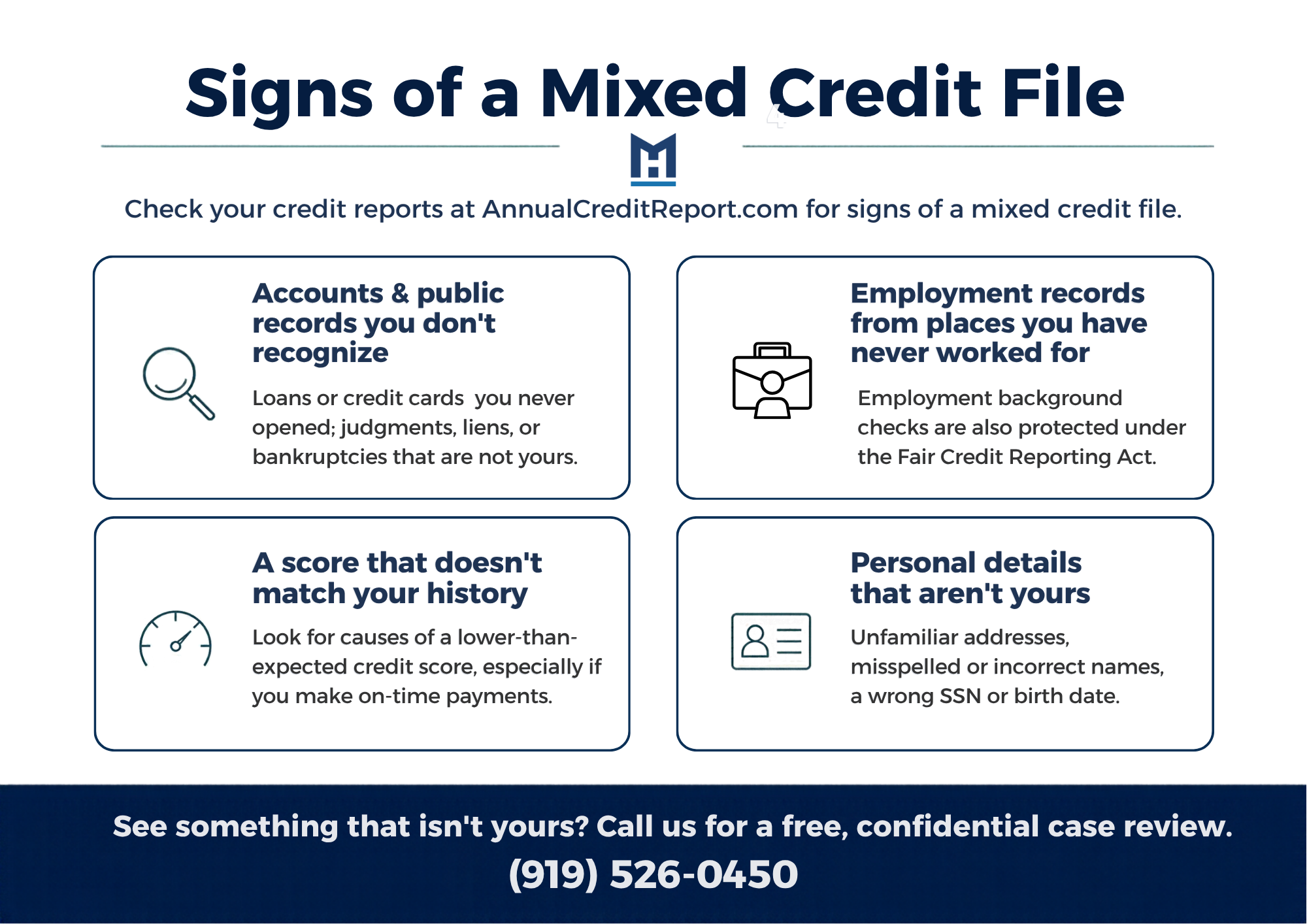
A mixed or otherwise inaccurate credit report can manifest in different ways. Some of the most common warning signs can be found by checking your reports from the three major bureaus:
Aside from checking your credit report for accuracy, an unexpected denial from an employer or lender may indicate errors in your credit files.
Consumers now have unprecedented, free weekly access to their reports. Follow these steps to access them:
AnnualCreditReport.com is the only federally authorized source for free credit reports. Stay clear of sites that offer you your own reports in exchange for a fee. Federal law requires each of the three bureaus to provide you with one free report per year. In recent years, all three bureaus have expanded that to offer free weekly reports.
To get a complete assessment of your credit reporting health, request reports from each of the three bureaus. You can get all three at the same time on AnnualCreditReport.com. Each bureau maintains its own file on you, so it’s important to check all three. An error that appears on one report may not show up on the other two.
AnnualCreditReport.com is a legitimate site that processes information securely. Don’t be alarmed when it asks you to take steps to verify your identity. The site will ask for your name, address, Social Security number, and date of birth. Additionally, you may be asked to provide an email or phone number for two-factor authentication requests from the individual bureaus.
Once you have your reports, go through them section by section. Pay close attention to the following:
For more detailed instructions, visit this page and download our free guide to downloading your credit reports.
Regardless of the type of inaccuracy or its cause, a mixed credit report file violates the standards set forth by the Fair Credit Reporting Act (FCRA). The FCRA is a federal law dedicated to upholding the accuracy, privacy, and fairness of consumer credit reports. You have the right to dispute errors with both the bureau and the company that supplied the information, and the bureau must conduct a reasonable re-investigation, generally within 30 days, correcting or deleting anything it cannot verify. Creditors that report to the bureaus must investigate disputes and report accurately as well. If a bureau or furnisher breaks these rules, you can bring a lawsuit seeking actual damages, statutory and punitive damages for willful violations, and attorney’s fees and costs paid by the defendant.
To dispute errors on your credit report, we recommend sending a written letter to the bureau(s) publishing the inaccuracies. Send the letter via certified mail to ensure you have a concrete paper trail. The letter must include an identification of the errors, as well as supporting documents to back up your claims. You must also draft a similar letter to the furnisher of the incorrect information (for example, a collection agency or bank). We created dispute templates for both the credit bureaus and whatever furnisher provided the false information. If you have any questions about disputing information on your credit report, contact us for assistance.
An experienced credit reporting lawyer can investigate the causes of your mixed credit report, help you dispute the errors, and, if applicable, file suit for FCRA violations. An attorney can handle the legal dealings and back-and-forth with creditors while you deal with the fallout of a mixed credit report. At Maginnis Howard, our consumer attorneys offer free consultations and represent clients on a contingency basis. That means you don’t pay anything unless we recover compensation on your behalf. If you have any questions, reach out today.
A mixed credit file can have a ripple effect on your life, and getting errors corrected is not always easy. For reliable, experienced representation, contact Maginnis Howard’s consumer lawyers. We represent clients across the Carolinas and beyond from our Raleigh, Charlotte, and Fayetteville offices. Call (919) 526-0450 or use our contact form to schedule a free, no-obligation consultation.
Having a mixed report does not mean you were the victim of identity theft. A mixed file is generally attributed to the credit reporting agency or furnisher (i.e., a creditor or lender) improperly combining data. In identity theft, someone deliberately misuses your information without permission.
Credit reporting agencies have 30 days from the time of dispute to investigate your claims. They have another five days to notify you of the results. If the bureau does not fix the information, reach out to an FCRA attorney immediately. The time it takes to fix reports denied during a previous investigation can be up to a year, though sometimes less. Contact us with the precise details of your case for a personalized estimate.
If a mixed file has already cost you a loan, a home, a job, or money, you may be entitled to compensation, not just a corrected report. Each case is different, but consumers can be entitled to monetary damages for statutory penalties, losses, and attorneys’ fees. An experienced credit reporting attorney will assess your claim to get a picture of the possible avenues of recovery.