New Clients Email

info@carolinalaw.com

Your Rights After a Tire Blowout Accident in North Carolina

Key Takeaways

In This Article

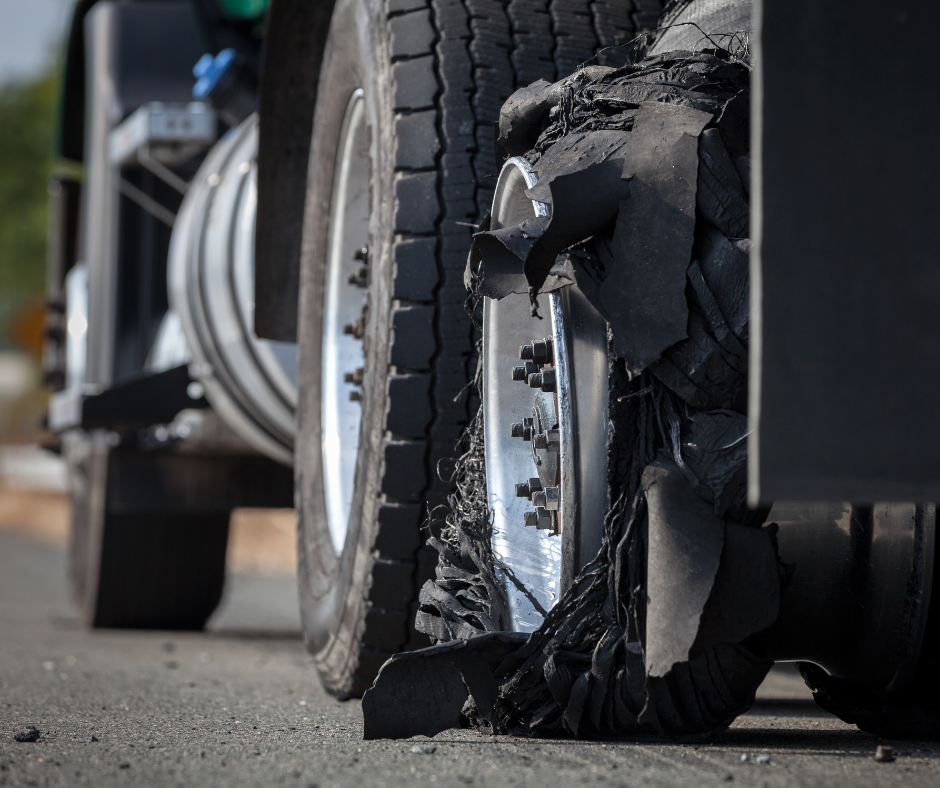
road gator, tire piece in the highway with a truck going by

Tire blowouts can be a terrifying cause of accidents on North Carolina roads. Even when a driver is operating a vehicle safely, a tire blowout can destabilize a vehicle and create a dangerous chain reaction. If you were the victim of a tire blowout accident, it’s important to know your rights. Whether you were hit by an out-of-control vehicle or a manufacturing defect caused you to lose control, you deserve compensation to help you rebuild. The experienced accident attorneys at Maginnis Howard are here to guide you through this process.

What Causes a Tire Blowout?

Understanding the cause of a tire blowout is essential to building your legal claim. A few of the most common causes include:

Tire Pressure

Tires require specific amounts of air pressure to function safely. If underinflated, the tire walls will wrinkle and fold as the tire rolls. This action generates heat and can fail catastrophically at high speeds. On the other hand, overinflated tires will bulge out and are more vulnerable to punctures and impact damage. Routinely monitoring tire pressure is the best way to protect yourself and others from these blowouts.

Worn or Bald Tires

Worn or bald tires pose a serious risk of a blowout. Most states, including North Carolina, require a minimum tread depth of 2/32” for passenger vehicles. A tread that has worn down or is completely worn off means less rubber separates the road from the tire’s internal structure.

Vehicle Weight

Just as every tire has a specific air pressure requirement, it also has a weight rating. Vehicles carrying weight beyond the limit place extreme stress on tires and dramatically increase the risk of blowouts. This is especially dangerous for larger vehicles, such as tractor-trailers carrying heavy loads. If a trucking company overloads its fleet, it may be held liable when that overloading causes a crash.

Road Conditions

Road conditions or debris in a vehicle’s path can easily cause a serious accident. If your accident was caused by hazardous road defects, you may be able to seek compensation from the person or entity responsible for the defect.

Manufacturing Defects

A poorly manufactured tire puts drivers at a disadvantage before even hitting the road. A product liability claim may be used to hold the manufacturer accountable for accidents.

Who Can Be Held Responsible for a Tire Blowout Accident in North Carolina?

Determining who is at fault for a tire blowout accident does not end with the at-fault driver. There can be many defendants in this type of crash based on the cause of the blowout. An experienced personal injury attorney can help you identify each party and hold them accountable. Examples of additional defendants can include:

  • The driver who experienced a blow out due to negligent maintenance.
  • A trucking company that failed to conduct regular checks.
  • The tire’s manufacturer that produced a faulty tire.
  • A government entity that failed to address serious road hazards.
  • A mechanic or tire repair shop that knowingly installed a defective tire.
💡 Did You Know?

The National Highway Traffic Safety Administration estimates tire failures contribute to 11,000 accidents each year.

Common Injuries from Tire Blowout Accidents

Tire blowout accidents are among the most violent and unpredictable types of crashes. Especially at high speeds, drivers can lose complete control in an instant, leading to rollovers, head-on collisions, guardrail impacts, and multi-vehicle pileups. The injuries that result are often severe and life-altering:

  • Traumatic brain injuries (TBI), ranging from concussions to permanent cognitive impairment
  • Spinal cord injuries and paralysis
  • Broken bones and fractures, including complex fractures requiring surgical repair
  • Internal organ injuries and internal bleeding
  • Severe lacerations, road rash, and scarring from rollover accidents
  • Soft tissue injuries, including whiplash and torn ligaments or tendons
  • Burns from post-crash fires
  • Wrongful death

What You Can Recover

North Carolina law allows car accident victims to pursue several types of monetary damages after a collision. The most common damages are broken into two categories:

Economic Damages

  • Past and future medical expenses such as emergency care, surgery, hospitalization, rehabilitation, and ongoing treatment.
  • Lost wages and reduced earning capacity.
  • Property damage.


Non-Economic Damages

  • Pain and suffering.
  • Emotional distress.
  • Loss of enjoyment of life.
  • Scarring and disfigurement.
  • Loss of consortium (companionship).


Punitive Damages

North Carolina law allows injury victims to recover punitive damages in cases involving fraud, malice, or willful or wanton conduct. In practice, that could look like a trucking company that doctored inspection records, a tire manufacturer that concealed known defects, or a driver who drove recklessly on tires they knew were unsafe. These awards are capped at three times compensatory damages or $250,000, whichever is greater. Punitive damages are not commonly awarded in most car accident cases, but an experienced attorney will assess your eligibility and fight for your rights.

Understanding North Carolina Laws

North Carolina law places certain restrictions on injury victims and their families when pursuing a claim.

Contributory Negligence

North Carolina is one of only four states that follow an archaic rule called contributory negligence. Under this rule, if you were even 1% at fault in the crash, you could be completely barred from recovering compensation.

Contributory negligence is one of the most powerful defenses available to insurance companies and defendants in North Carolina. Seemingly innocent comments like “I should have swerved sooner” or “I knew my tires were a little low” can potentially be used against you. To avoid the pitfalls of contributory negligence, do not speak to the at-fault driver’s insurance company until you have consulted with your personal injury attorney

Statute of Limitations

In North Carolina, most personal injury claims must be filed within three years of the date of the injury. Missing this deadline almost always means losing your right to recover, regardless of how strong your case is. If you are filing a claim on behalf of a loved one killed in an accident, you have two years from the date of death (not the date of the accident). While two or three years may sound like a long time, building a strong tire blowout case requires early action. You will work with an attorney to obtain physical evidence, surveillance footage, witness statements, and more. The sooner you speak with an attorney, the stronger your case will be.

Why Choose Maginnis Howard?

Unlike some of the big firms that treat clients like case numbers, we get to know you. We work to understand the full picture of your life and the effects of your injury. Our legal team is dedicated to maintaining clear, consistent communication, keeping you informed every step of the way. We’ll present your options transparently and never pressure you into settling too quickly. Our attorneys are committed to resolving your case in the best way possible for your circumstances.

Contact Us

We are dedicated to getting our clients what they deserve after an accident. Maginnis Howard’s tire blowout accident attorneys offer free consultations, and you pay only if we win compensation on your behalf. We have three conveniently located offices across the state in Raleigh, Charlotte, and Fayetteville. To speak with an intake specialist, visit our contact page or start a chat with a Live Agent for further information.

Contact Us

Recent Posts