What is an underride truck accident?
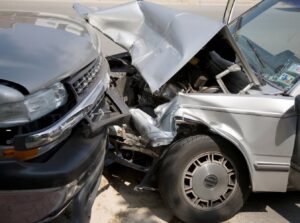
Underride truck accidents in North Carolina happen when a smaller vehicle slides beneath the trailer of a large commercial truck, often causing catastrophic or fatal injuries.
Underride truck accidents in North Carolina are among the most deadly collisions on the state’s highways, occurring when a passenger vehicle slides beneath the body of a commercial trailer and the trailer’s undercarriage contacts the vehicle’s roof, windshield, or passenger compartment directly.
The injuries that result, traumatic brain injuries, severe spinal trauma, and fatal head injuries, reflect what happens when a vehicle designed to protect occupants at human height meets a structure that begins three or four feet off the ground.
A truck accident attorney who handles commercial vehicle cases understands both the federal regulatory framework that governs these crashes and the liability questions they raise.
Key Takeaways for Underride Truck Accidents in North Carolina
- Two distinct crash types exist: Rear underride occurs when a vehicle slides under the back of a trailer. Side underride occurs when a vehicle slides under the side. Each involves different federal requirements and different truck accident liability questions.
- Federal guards are required for rear underride, not side: The Federal Motor Carrier Safety Administration requires rear underride guards on most commercial trailers. Side underride guards are not federally mandated, a regulatory gap that safety advocates have worked to close for decades.
- Guard failure creates a product liability angle: When a rear underride guard fails to perform as required, the trailer manufacturer, the trucking company, or a maintenance contractor may bear responsibility alongside or instead of the driver.
- Multiple parties may share liability: The driver, the motor carrier, the trailer manufacturer, and in some cases a maintenance contractor may all share responsibility depending on the specific facts of the crash.
What Is an Underride Truck Accident?
An underride crash happens when a passenger vehicle slides beneath the body of a commercial trailer during a collision. Because trailer bodies on most commercial trucks sit well above the road surface, a vehicle can pass under the trailer without the truck’s frame stopping the forward momentum. The trailer undercarriage then contacts the occupant space directly.
Standard vehicle safety systems assume that collision forces will act on the vehicle at roughly the same height as the occupants. When a car slides under a trailer, those systems may not engage properly, and the outcome depends on what the trailer’s underside contacts first.
Rear Underride Crashes
Rear underride happens when a vehicle strikes the back of a slowing or stopped trailer and slides beneath it rather than stopping against it. This is the scenario federal regulations have addressed most directly. According to the National Highway Traffic Safety Administration, rear underride crashes are a significant contributor to fatalities in truck-involved collisions nationally.
Rear underride most often occurs when a truck slows or stops on a highway and the following vehicle has insufficient time to brake. Low-visibility conditions, including nighttime driving and fog on North Carolina highways, increase the frequency and severity of these crashes.
Side Underride Crashes
Side underride occurs when a vehicle slides under the side of a trailer, typically in intersection collisions or when a truck makes a wide turn across a vehicle’s path. No federal requirement mandates side underride guards on commercial trailers, making these crashes a particularly serious concern.
Side impact airbags and modern vehicle safety systems are generally not designed to address the geometry of a vehicle passing beneath the side of a trailer. The gap between the bottom of the trailer and the road surface occupies the same vertical space as the passenger compartment of most sedans and smaller SUVs.
Why Underride Crashes Are So Dangerous on North Carolina Highways
The danger in underride crashes is geometric. A fully loaded commercial trailer sits roughly 50 inches off the ground at its lowest point, which corresponds closely to the height of the passenger compartment in most passenger vehicles. When a vehicle slides beneath a trailer, the roof and upper structure absorb the full force of the trailer undercarriage.
High-speed travel on North Carolina’s commercial corridors increases stopping distances for both trucks and the vehicles following them. A fully loaded commercial truck traveling at highway speeds requires significantly more distance to stop than the vehicles behind it. When traffic slows suddenly, the gap between a truck’s actual stopping point and a following vehicle’s reaction closes in seconds.
Poor visibility compounds the problem significantly. NHTSA crash data consistently shows that a disproportionate share of truck-involved fatalities occur at night or in low-visibility conditions. North Carolina’s highway interchanges and rural stretches near Raleigh see both heavy commercial truck traffic and sections with limited roadway lighting.
Federal Safety Requirements for Truck Underride Guards
Federal regulations have addressed rear underride risk more directly than side underride risk. Understanding what the law requires, and where it does not reach, is central to any legal analysis of these crashes.
| Guard Type | Federal Requirement | Standard Applied | Known Coverage Gap |
|---|---|---|---|
| Rear underride guard | Required on most commercial trailers under FMCSA standards | Must withstand defined impact forces at specified test points | Does not address offset impacts at corner positions of the trailer |
| Side underride guard | Not federally required | No federal standard currently in force | The full side of a commercial trailer carries no mandated protection |
Rear Underride Guards: What the Law Requires
The Federal Motor Carrier Safety Administration requires rear underride guards, sometimes called ICC bars or rear impact guards, on most commercial trailers operating in interstate commerce under 49 CFR Part 571. These guards must meet specific strength and positioning standards designed to stop a vehicle before it slides under the trailer’s rear.
Research from the Insurance Institute for Highway Safety has documented cases where rear guards that passed federal testing standards failed in offset crashes, where a vehicle strikes the corner of the trailer rather than the center. The regulatory standard addresses direct-center impacts more effectively than the angled collisions that occur in real traffic conditions.
Side Underride Guards: A Persistent Regulatory Gap
No federal standard requires side underride guards on commercial trailers operating in North Carolina. This gap has been the subject of safety advocacy and proposed federal rulemaking for decades without producing a mandatory standard. Some manufacturers have voluntarily added side protection to their trailers, but the absence of a federal requirement means that most trailers in commercial service carry no lateral underride protection.
When a trailer involved in a crash lacked voluntarily available protection, the decision not to include that feature may support a product liability or negligent design argument depending on the specific facts.
Who May Be Liable in a North Carolina Underride Truck Accident?
These cases frequently involve multiple parties whose decisions or failures contributed to the crash outcome. Questions about how liability divided in multi-vehicle truck accidents can become central to the case when several drivers, trucking companies, or third parties may share responsibility. A truck accident attorney investigates the full chain of responsibility rather than accepting the most straightforward answer.
Parties that may share liability in a North Carolina underride crash include:
- The commercial driver: Stopping on a highway without adequate warning devices, failure to use required lighting, and other operational conduct can contribute directly to a rear or side underride crash.
- The motor carrier: Trucking companies bear responsibility for maintaining their equipment, including underride guards, and for complying with FMCSA regulations for trucking companies that govern safety, inspections, driver qualifications, and operational standards. They are also responsible for the overall FMCSA compliance of their operations.
- The trailer manufacturer: When a rear underride guard fails to perform as required under federal standards, or when a trailer was manufactured without available safety features, the manufacturer may face product liability exposure.
- A maintenance contractor: When inspection or maintenance records show that a guard was damaged or non-compliant and was not repaired, the contractor responsible for that work may share liability for the outcome.
- A cargo or loading company: In some side underride crashes, cargo loading decisions affect trailer stability or the conditions preceding the impact. Loading companies may carry independent liability in those situations.
Identifying every potentially responsible party from the start protects the full value of a claim and prevents the loss of evidence establishing each party’s role.
What Makes Underride Cases Different From Standard Truck Accident Claims
Standard truck accident claims focus primarily on driver conduct and motor carrier responsibility. Underride cases often add a product liability dimension that most truck crash claims do not involve.
When a rear guard fails, the question of whether it was defective, improperly maintained, or inadequate by design requires a different investigation than a standard negligence analysis. Engineering analysis, guard testing records, and manufacturer documentation become relevant.
These are not routine evidence requests in a standard vehicle collision claim.
The involvement of a trailer manufacturer also changes the defendant landscape. Manufacturers approach these cases differently than motor carriers, with different insurance structures, legal teams, and litigation strategies.
Preparation for that complexity begins at the start of the case, not after the simpler defendants have been pursued.
Evidence that carries particular weight in underride cases includes:
- Event data recorder output: Speed, braking, and operational data from the seconds before impact establishes the mechanical picture of how the crash happened.
- Guard condition and inspection records: Pre-crash inspection logs, maintenance records, and post-crash photographs document whether the guard met required standards at the time of the collision.
- Manufacturer compliance documentation: Records showing whether the guard met federal testing standards and whether the manufacturer had knowledge of performance limitations in offset crash scenarios.
- Crash reconstruction analysis: Reconstruction of the angle and speed of impact determines whether a compliant, properly maintained guard would have prevented the underride.
Building this evidentiary record requires legal action quickly, before records are lost, equipment is repaired, or the truck returns to service.
FAQ for Underride Truck Accidents in North Carolina
What is the difference between a rear underride and a side underride crash?
A rear underride crash happens when a vehicle strikes the back of a trailer and slides beneath it. A side underride crash happens when a vehicle slides under the side of a trailer, typically in intersection collisions or during wide turns. Both are potentially fatal, but they involve different federal regulations, different evidence sources, and potentially different defendants depending on the facts.
Do all commercial trailers operating in North Carolina have underride guards?
Federal law requires rear underride guards on most commercial trailers in interstate commerce. Side underride guards are not federally required. Some manufacturers include them voluntarily, but no federal standard mandates their use. Whether a trailer had a functioning, compliant guard at the time of a crash is a question a truck accident attorney investigates as part of any underride claim.
Can a claim be pursued if the truck driver was not primarily at fault?
Driver fault is not the only basis for a claim in an underride crash. When a guard fails to perform as required, or when a trailer lacked available safety features, the claim may center on product liability rather than driver negligence alone. An attorney evaluates all potential sources of responsibility, not only the most visible one at the crash scene.
How quickly should a family or survivor contact a truck accident attorney?
As soon as possible. Event data recorder information can be overwritten, equipment gets repaired or returned to service, and inspection records have retention limits. North Carolina allows three years from the date of injury to file a personal injury claim under state law, but the practical window for preserving critical evidence closes far sooner than that deadline suggests.
The Gap Between What the Law Requires and What These Crashes Cost

For families dealing with the consequences of an underride crash on a North Carolina highway, the legal questions extend beyond who was driving. They reach the equipment, the maintenance records, the design decisions, and the regulatory gaps that allowed a catastrophic outcome to occur.
If someone close to you was injured or killed in an underride crash near Raleigh or anywhere along North Carolina’s commercial highway corridors, what would it mean to have a truck accident attorney examine every potential source of responsibility in that crash?
Call our Raleigh office at (919) 526-0450 for a free consultation.