If you were just in an Uber accident in Raleigh, there are three things you need to do as soon as possible:
- Screenshot your Uber app. Capture your ride history, trip receipt, and any details about the driver. This data can disappear or become harder to access as time passes.
- See a doctor within 72 hours. Even if you feel fine, get checked out. Insurance companies use gaps in treatment to argue you weren’t really hurt.
- Don’t give a recorded statement to any insurance company yet. You have the right to wait until you understand your options.
These steps matter because Uber accidents aren’t like regular car crashes. The amount of insurance coverage available (anywhere from $50,000 to $1 million) depends entirely on whether the driver had accepted a ride at the moment of impact. That’s information stored on Uber’s servers, not something you can see. If you don’t preserve the right evidence quickly, you could end up in a coverage gap where no one wants to pay, which is why contacting a Raleigh car accident attorney as soon as possible can help protect your claim.
If you have questions about which insurance policy applies to your crash, call Maginnis Howard today before the trip data disappears.
Key Takeaways for Uber Accidents in Raleigh
- The driver’s app status determines the available insurance coverage. This dictates whether you are dealing with a small personal policy, a limited commercial policy, or Uber’s full $1 million corporate policy.
- North Carolina’s contributory negligence law can bar your entire claim. If you are found even 1% at fault for the accident, you may be prevented from recovering any compensation for your injuries.
- You must act quickly to preserve evidence. Securing digital trip data from the Uber app and getting a medical evaluation within 72 hours are the most important steps to building a strong claim.
Immediate Steps to Take from Home (Evidence Preservation)
Once you are home and the immediate chaos of the scene has settled, you have a short window to secure evidence that only exists digitally. The physical debris on the road is gone, but the electronic footprint is still fresh. You need to capture it before it is overwritten or archived.
Step 1: App Data
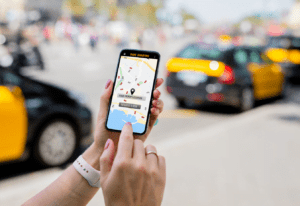
If you were a passenger, open your Uber app immediately. Take screenshots of your ride history, the specific trip receipt, and the Safety Toolkit report if you used it. App interfaces update, and ride history can sometimes become harder to access after a certain period.
If you were the driver of another car, you do not have access to this data because Uber stores this information on their private servers, not on the driver’s phone. This means the driver cannot show you proof of their status even if they wanted to. We have to send a spoliation letter (a formal legal demand) to Uber’s legal department to prevent them from deleting this trip data in the ordinary course of business.
Step 2: See a Doctor ASAP
Adrenaline is a powerful masker of pain. It is common for victims of rear-end collisions, the most frequent type of rideshare accident, to feel fine at the scene, only to wake up two days later with severe neck stiffness or radiating back pain. This is whiplash, and it is a legitimate medical injury.
Insurance algorithms, however, look for gaps in treatment. If you wait two weeks to see a doctor, the software used by adjusters typically devalues your claim, operating on the assumption that if you didn’t see a doctor immediately, you weren’t truly hurt. You need to generate an official medical record within 72 hours. This medical record serves as the foundation for any future compensation.
Step 3: Report the Crash, But Do Not Overshare
You need to report the accident to Uber, but you must be strategic. Use the Report a Crash feature in the app if you were a passenger. Keep your description purely factual. “I was in a crash on [Date] at [Time] near [Location].”
- Do not offer theories on who was at fault.
- Do not say, “The driver didn’t see the other car,” or “I think he was going too fast.”
- Do not apologize.
Anything you type into that text box is a recorded statement that can be used by Uber’s defense team later. Your goal is simply to open the claim file, not to solve the case.
Why Uber Accidents Are Legally Different Than Regular Crashes
In a typical Raleigh fender-bender, you exchange information with the other driver, and their personal auto policy covers your damages up to their limits.
Rideshare accidents complicate this because the driver is using their personal vehicle for commercial purposes. Personal auto policies almost always have a business use exclusion and this means if the driver was working, their personal insurer can legally deny the claim.
To solve this, North Carolina law mandates a tiered insurance structure.
Phase 1: App On, Waiting for a Ride
This is the most dangerous phase for victims. The driver is logged into the Uber app and is available to accept trips, but has not yet accepted one. In this phase, Uber provides a limited liability policy: $50,000 for bodily injury per person, $100,000 per accident, and $25,000 for property damage.
The conflict arises because Uber’s coverage is technically secondary to the driver’s personal insurance. However, the driver’s personal insurer will likely deny the claim because the app was on, which creates a gap where you must prove the app status to trigger Uber’s backup policy. Understanding how rideshare insurance coverage in Raleigh works is critical in these situations. Without that proof, you may find yourself fighting two insurance companies who both say they aren’t responsible.
Phase 2: En Route to Passenger
Once the driver accepts a ride request and is navigating to the pickup location, such as when they are on I-440 or turning onto Glenwood South, coverage increases significantly. The state mandates $1 million in commercial liability coverage. This covers you if the Uber driver hits your car or if they hit you while you are a pedestrian, which is why speaking with a pedestrian accident lawyer can be important after a serious crash.
Phase 3: Passenger in Car
This offers the highest level of protection. The $1 million liability limit applies, plus coverage for Uninsured/Underinsured Motorists (UM/UIM). If you are the passenger in the Uber, you are generally covered by this large corporate policy regardless of who caused the crash, provided the other driver is uninsured or the Uber driver was at fault.
The ambiguity of Phase 1 is a frequent issue in local cases, especially near RDU airport or downtown Raleigh, where drivers frequently idle while waiting for a ping. Proving the driver had accepted a ride (Phase 2) versus just waiting (Phase 1) is the difference between a $50,000 cap and a $1 million cap.
The Contributory Negligence Trap in North Carolina
North Carolina is one of only four states (plus D.C.) that follows a strict legal doctrine known as contributory negligence. This is the single biggest threat to your injury claim, and insurance adjusters know exactly how to use it.
The 1% Rule
In most states, if you are partly at fault for an accident, your compensation is simply reduced by your percentage of fault. In North Carolina, the rule is absolute. If you are found to be even 1% responsible for the accident, you are barred from receiving any compensation.
How This Affects Uber Cases
If you were driving another car and were hit by an Uber, the corporate defense team will scour the evidence for that 1%. Did you fail to use a turn signal? Were you driving 5 mph over the speed limit on Wade Avenue? If they can pin any negligence on you, they can walk away without paying a dime.
If you were a passenger in the Uber, you are generally safe from this defense. It is very difficult to argue that a passenger in the back seat contributed to the driver’s crash, unless you were physically interfering with the driver. However, if you were a pedestrian or cyclist, this defense is used aggressively. They may argue you were crossing outside of a crosswalk or wearing dark clothing at night.
The defense strategy is to use this law as leverage. They might deny your claim early, hoping you don’t realize that objective evidence, like traffic cameras or black box data, could prove you were 0% at fault. We fight this by reconstructing the accident with data, not just he-said-she-said testimony.
Dealing with Insurance Adjusters: What You Need to Know
After the accident, you will likely be contacted by adjusters from multiple companies: the Uber driver’s personal insurer, Uber’s corporate insurer (often Progressive, Allstate, or Liberty Mutual), and potentially your own insurance company. Understanding how these companies operate and speaking with a personal injury lawyer can help you avoid costly mistakes during the claims process.
The Business Model
Insurance companies are businesses that balance claim payouts with profitability. Adjusters are not out to get you, but they are professionals tasked with closing files efficiently and accurately based on the information they have. They handle hundreds of claims a year while you are likely handling your first.
The Recorded Statement Request
An adjuster will typically ask for a recorded statement early in the process. The goal of this statement is to lock you into a version of events before you have the full picture. If you say “my back feels okay” on day two, and then find out you have a herniated disc on day ten, that recording can be used to question the severity of your injury.
You have the right to decline a recorded statement until you have legal counsel. A polite, simple response is best: “I am not ready to give a recorded statement at this time. I would like to focus on my medical recovery first.”
The Quick Settlement Offer
You may receive a settlement offer very quickly, sometimes within a week. This offer is usually calculated based on your initial emergency room bills and perhaps a small amount for inconvenience. It rarely accounts for future physical therapy, lost wages from missed work, or ongoing pain.
Once you accept this check and sign the release, your claim is closed forever. You cannot come back later if your injuries turn out to be more serious. We recommend having a lawyer review any offer before you sign it to ensure it covers the full scope of your damages.
Scenarios: Passenger vs. Driver vs. Pedestrian
If You Were the Uber Passenger
This is legally the safest position because you were not driving, which means you bear almost no risk under contributory negligence in North Carolina. You are covered by Uber’s $1 million Phase 3 policy, but your primary challenge is usually proving the extent of your damages rather than liability.
However, if the Uber driver claims someone else hit them and fled, or if they deny the ride was active, you need app data to secure your coverage.
If You Were Driving Another Car
Your fight comes down to two things: liability and coverage.
- First, you must prove the Uber driver caused the crash (and that you contributed 0%).
- Second, you must prove the Uber driver was on the clock to access the higher insurance limits.
If the insurer successfully argues the driver was offline or using the car for personal errands, you are stuck dealing with their personal policy, which in North Carolina could be as low as $30,000.
If You Were a Pedestrian/Cyclist
These accidents typically result in severe injuries requiring expensive medical care. Accessing the $1 million commercial limit is frequently necessary to cover hospital bills. However, insurance adjusters typically scrutinize pedestrian behavior heavily for contributory negligence, which is a common issue in pedestrian accidents involving Lyft drivers.
Did you have the walk signal? Were you in the bike lane? Establishing that the Uber driver was distracted by their app, such as looking for a pickup location, can be a key factor in defeating these defenses.
FAQ for Uber Accidents in Raleigh
What if the Uber driver was at fault but says the app was off?
We can subpoena the electronic logs (the Waybill) from Uber to prove their status. Drivers sometimes claim the app was off to avoid getting in trouble with Uber, but the digital timestamp on Uber’s servers provides the definitive truth. We must act fast to preserve this data.
Can I sue Uber directly, or just the driver?
Generally, you sue the driver. Uber classifies its drivers as independent contractors to isolate the corporation from direct liability. However, you can still access Uber’s insurance policy without suing Uber directly. In rare cases where Uber failed to screen a dangerous driver (e.g., missed a background check), you might have a direct claim against the company for negligent hiring.
What if the Uber driver hit me and fled (Hit and Run)?
If you cannot identify the driver, you may need to rely on your own Uninsured Motorist (UM) coverage. If you were a passenger in an Uber that was hit by a hit-and-run driver, Uber’s UM policy steps in to cover you. This ensures you aren’t left with bills due to an anonymous driver’s negligence.
We Handle the Investigation. You Focus on Your Recovery.
You shouldn’t have to spend your recovery time fighting with insurance algorithms or worrying about difficult liability laws.

At Maginnis Howard, we know how to secure the digital footprint required to prove the driver’s status and protect your claim.
Call us today and we will review the facts of your crash, determine which insurance policy applies, and tell you exactly what your claim is worth.