Determining who pays for your medical bills after a Lyft driver hits you depends entirely on one thing: the precise status of the driver’s app at the moment of impact.
Most people assume that if a car has a Lyft sticker on the windshield, Lyft is automatically responsible for the accident. In reality, North Carolina law and insurance regulations recognize three distinct phases of a rideshare transaction. Each phase triggers a different insurance policy with vastly different payout limits.
The three phases generally break down as follows:
- Phase 1: The app is off (The driver is personally liable).
- Phase 2: The app is on and searching (Limited coverage applies).
- Phase 3: The driver is en route to or transporting a passenger (Maximum coverage applies).
The main challenge in these cases is that insurance carriers frequently dispute which phase the driver was in. The driver’s personal auto carrier may deny the claim because the driver was using the car for business, violating their policy terms. Simultaneously, Lyft may deny the claim by arguing the driver wasn’t technically on a trip yet.
This creates a coverage gap that can leave injured pedestrians without recourse unless specific digital evidence is secured immediately. At Maginnis Howard, our Raleigh pedestrian accident lawyer team handles the investigation required to prove the driver’s status and hold the correct insurer accountable.
Key Takeaways for Raleigh Lyft Pedestrian Accidents
- Lyft’s insurance coverage depends on the driver’s app status. The amount of compensation available changes drastically depending on whether the driver was offline, waiting for a ride, or actively transporting a passenger.
- North Carolina’s contributory negligence law can prevent you from recovering any money. If you are found to be even 1% at fault for the accident, you may be barred from receiving compensation.
- Never give a recorded statement to an insurance adjuster without legal counsel. Adjusters are trained to ask questions that can be used to assign partial fault to you, which can jeopardize your entire claim.
Steps to Take Immediately After Returning Home
Now that you are home, the actions you take will directly influence the viability of your claim. The period immediately following the accident is where many pedestrians inadvertently weaken their position before they ever speak to an attorney.
Prioritize Medical Continuity
If you visited the emergency room at WakeMed or Duke Health, your discharge papers likely instructed you to follow up with a specialist or your primary care physician. You must follow these instructions strictly.
Insurance adjusters look for gaps in treatment. If you wait two weeks to see a doctor because you are toughing it out, an adjuster may argue that your injuries were not serious, or that they were caused by something else during that two-week break. Consistent medical records provide the necessary proof of injury severity.
The Silence Strategy
You will likely receive calls from multiple insurance adjusters, such as one representing the driver personally and another representing Lyft. They may sound friendly and concerned, asking simply to “hear your side of the story” to process the claim.
Do not give a recorded statement to any insurance representative without legal counsel.
Adjusters are trained to minimize payout exposure. They know the specific legal thresholds for contributory negligence in North Carolina. A seemingly innocent comment like, “I didn’t see him coming because I was checking my watch,” can be used to argue you were partially at fault.
This is a key point: Under North Carolina rideshare laws admitting even 1% of the fault can bar your entire claim.
Preserve Your Memory of the Event
Memory fades quickly, and trauma can blur details. As soon as you are able, write down everything you remember. Specifically, focus on details regarding the driver’s behavior:
- Did the driver mention they were looking for a passenger?
- Did you see a phone mounted on the dashboard with a map open?
- Was the Lyft amp light (the glowstache) illuminated on the dashboard?
These details help us establish the driver’s status if the electronic logs are later disputed.
The Three Layers of Lyft Insurance Coverage
Rideshare lyft’s insurance coverage is tiered. The amount of money available to pay for your surgery, rehabilitation, and lost wages changes based on the driver’s activity within the app.
The “App Off” Scenario
If the driver was not logged into the Lyft app, Lyft provides zero coverage. The driver is viewed as a private citizen driving their personal vehicle. In this scenario, any claim must be filed against the driver’s personal auto insurance policy.
There is a significant risk here. Many personal auto insurance policies contain a business use exclusion. If the driver was essentially roaming to see if it was a busy time, but hadn’t logged in yet, their personal insurer might deny the claim, arguing the car was being used for commercial purposes. This can leave the driver effectively uninsured.
The “App On, No Passenger” Scenario
This is Phase 2. The driver is logged in and waiting for a ride request but has not yet accepted one. In this phase, the driver’s personal insurance may deny coverage due to the business use exclusion. To fill this gap, Lyft provides limited liability coverage.
Typically, this coverage offers:
- $50,000 for bodily injury per person.
- $100,000 for bodily injury per accident.
- $25,000 for property damage.
While this ensures some coverage exists, $50,000 is frequently insufficient for pedestrian accidents, which typically result in catastrophic injuries requiring surgery and long-term therapy. If your medical bills exceed $50,000, recovering the difference becomes difficult unless you have your own Underinsured Motorist (UIM) coverage.
The “En Route” or “Active Trip” Scenario
This is Phase 3. The moment the driver accepts a ride request, Lyft’s full corporate insurance policy kicks in. This coverage remains active while the driver travels to pick up the passenger and lasts until the passenger exits the vehicle and the ride is ended in the app.
This policy typically provides $1 million in third-party liability coverage. This is the best-case scenario for recovery, as it provides ample resources to cover extensive medical bills and pain and suffering.
Because the difference between Phase 2 ($50k) and Phase 3 ($1M) is so drastic, disputes frequently arise regarding exactly when the accident occurred relative to the ride acceptance. We use metadata and electronic timestamps to verify exactly when the ride was accepted to ensure you access the higher policy limit if applicable.
North Carolina’s Contributory Negligence Standard
Raleigh residents must understand that North Carolina is one of the few remaining states that follows the doctrine of pure contributory negligence. This legal standard is strict and unforgiving.
The 1% Rule
As we’ve mentioned earlier, under this doctrine, if an injured person is found to be even 1% at fault for the accident, they are generally barred from recovering any compensation. This differs from comparative negligence states, where your payout is simply reduced by your percentage of fault.
How This Affects Your Claim
Insurance adjusters for Lyft and the driver are acutely aware of this law. Their investigation will typically focus less on what their driver did wrong, and more on what you might have done wrong. They will look for evidence that you were:
- Crossing outside of a marked crosswalk (jaywalking).
- Crossing against the signal (Do Not Walk sign).
- Looking down at your phone while walking.
- Wearing dark clothing at night in poorly lit areas.
This is not necessarily done out of malice; it is the function of the insurance system in North Carolina. If they can demonstrate you contributed to the accident, they have no legal obligation to pay the claim, which is why many victims choose to consult a car accident lawyer before speaking with insurance companies.
Countering Bias with Objective Data
To overcome this defense, we do not rely on he-said-she-said arguments. We look for objective data to prove the driver was solely responsible or had the Last Clear Chance to avoid you. We may utilize:
- Electronic Control Module (ECM) Data: The vehicle’s black box records speed, braking, and steering inputs. If the data shows the driver didn’t brake until after impact, it counters the argument that you darted out unexpectedly.
- Traffic Camera Footage: Raleigh has numerous traffic and security cameras. We work to secure this footage before it is overwritten.
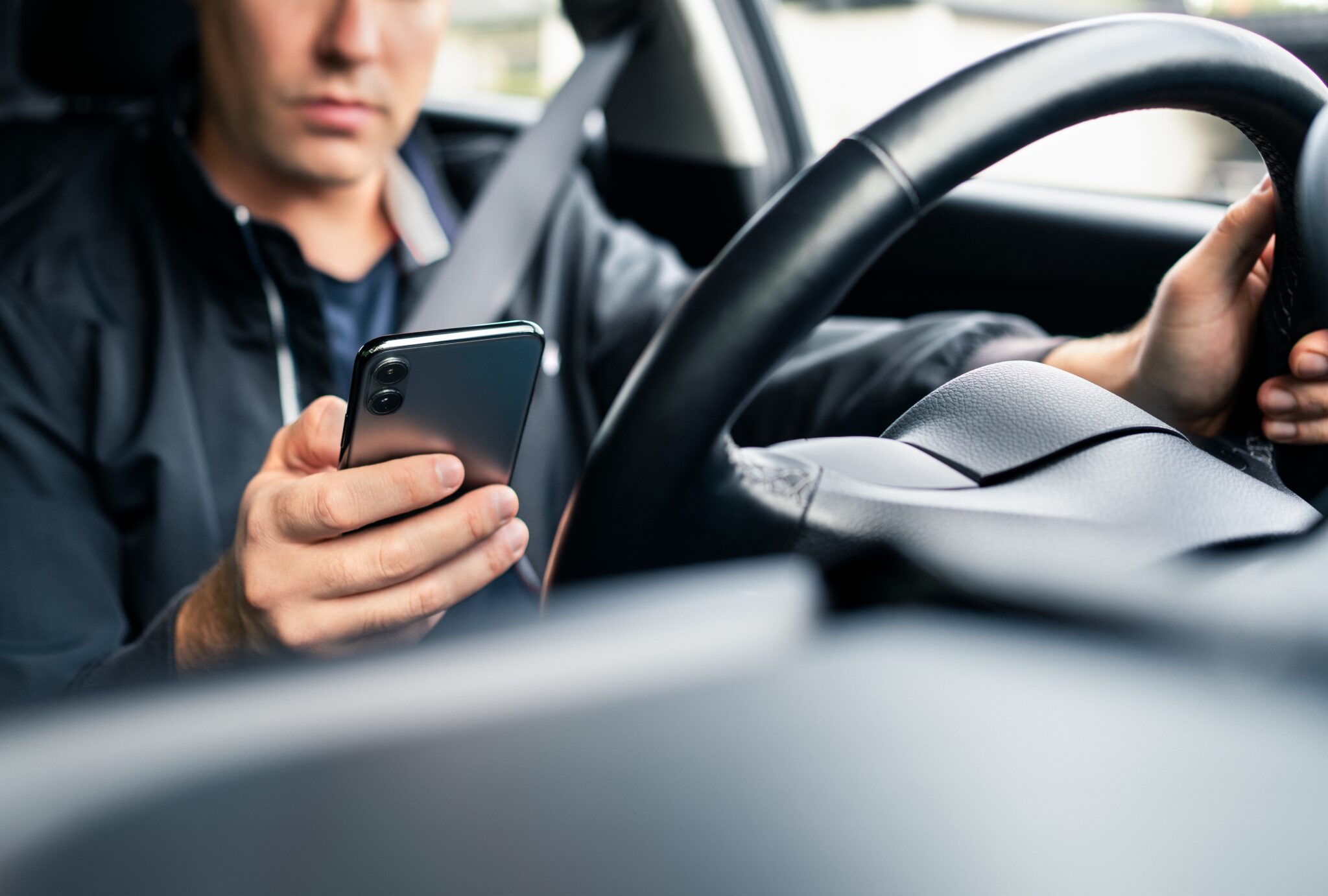
- App Usage Data: If the driver was interacting with the Lyft app (accepting a ride or checking the map) at the time of the crash, it constitutes distracted driving, which weighs heavily against them.
If you are worried that you might be partially at fault, contact us immediately. Admitting fault to an adjuster is final; discussing the facts with an attorney is privileged and confidential. We can evaluate whether exceptions, such as the Last Clear Chance doctrine, apply to your case.
Why Liability Usually Falls on the Driver, Not Lyft
You might wonder why you can’t simply sue Lyft directly. After all, they are the multi-billion dollar corporation that facilitated the ride. However, the legal relationship between Lyft and its drivers is structured to insulate the company from liability.
The Independent Contractor Defense
Lyft classifies its drivers as independent contractors, not employees. Legally, this generally means the company is not responsible for the negligent actions of the driver under the doctrine of respondeat superior (Latin for “let the master answer”). When a FedEx truck hits you, FedEx is liable because the driver is an employee. When a Lyft driver hits you, the driver is liable, and Lyft merely provides the insurance policy that pays the judgment.
Consequently, the lawsuit is typically filed against the driver by name, not Lyft.
Exceptions: When We CAN Sue Lyft
There are specific scenarios where Lyft can be held directly liable for its own negligence, rather than the driver’s.
Negligent Hiring and Retention
Lyft has a duty to ensure their drivers meet safety standards. If we investigate and find that Lyft failed to run a proper background check, or if they allowed a driver onto the platform who had a suspended license or a history of violent driving offenses, Lyft may be directly liable for negligent hiring.
Similarly, if a driver had multiple complaints filed against them for reckless driving or intoxication, and Lyft failed to deplatform them, the company could be liable for negligent retention. We will obtain internal records from Lyft regarding the driver’s history and consumer complaints.
Addressing Hit-and-Runs and Uninsured Drivers
Pedestrian accidents involving rideshare drivers sometimes turn into hit-and-run cases. A driver who realizes they have hit a person may panic, fearing the loss of their income and potential criminal charges, and flee the scene.
Finding the Driver Through Digital Footprints
Unlike a standard hit-and-run, rideshare vehicles leave a digital trail. If you recall the general time and location of the accident, it is sometimes possible to subpoena records to identify which Lyft drivers were active in that precise geofence at that moment.
By cross-referencing GPS data with any description of the vehicle, we may be able to identify the driver even without a license plate number.
Uninsured Motorist (UM) Coverage
If the driver is never found, or if they are found but possess no insurance and were not logged into the app (meaning Lyft denies coverage), you are not necessarily out of options. You may be able to file a claim under your own Uninsured Motorist (UM) policy.
Many pedestrians are unaware that their own car insurance covers them when they are walking. If you have UM coverage, it steps into the shoes of the at-fault driver. If you do not own a car, you may still be covered under a policy held by a resident relative (a family member you live with). We review all available household policies to find coverage.
FAQs: Pedestrian Rideshare Accidents
Can I still sue if I was jaywalking in Raleigh?
It is difficult due to the contributory negligence law, but not always impossible. If we can prove the driver had the Last Clear Chance to avoid hitting you (for example, if you were visible in the road for several seconds and the driver was distracted), you may still be able to recover damages. These cases require substantial evidence.
Does Lyft pay for my medical bills as they come in?
No. Liability insurance pays a lump sum settlement only at the end of the case when you sign a release. In the meantime, you must use your health insurance, MedPay coverage, or arrange payment plans with your providers.
What if the driver was working for both Uber and Lyft?
Drivers frequently run both apps simultaneously. We will investigate the digital logs to see which app was active, or if a ride was accepted on one specific platform. The company whose app was facilitating a ride at the time generally holds the primary liability.
How long do I have to file a claim in North Carolina?
The statute of limitations for personal injury cases in North Carolina is generally three years from the date of the accident. However, waiting is inadvisable because evidence, such as dashcam footage and app data, can be deleted or lost within weeks, which is why speaking with a Raleigh personal injury lawyer as soon as possible is important.
What if I was hit by a Lyft driver while riding a scooter?
If you were riding a rental scooter (like Lime or Bird), the scenario is legally similar to a pedestrian accident regarding vulnerability. However, because you were on a motorized device, traffic laws applicable to vehicles usually apply to you. The insurance layers for the Lyft driver remain the same.
We Identify the Coverage So You Can Focus on Healing

Recovering from a pedestrian accident is physically demanding; managing the bureaucratic friction of a multi-billion dollar tech company’s insurance phases should not be your responsibility while you are recovering.
At Maginnis Howard, we handle the legal mechanics of rideshare liability. We know how to secure the app data, preserve the vehicle’s black box information, and challenge allegations of contributory negligence.
If you or a loved one has been injured by a Lyft driver, contact Maginnis Howard today.