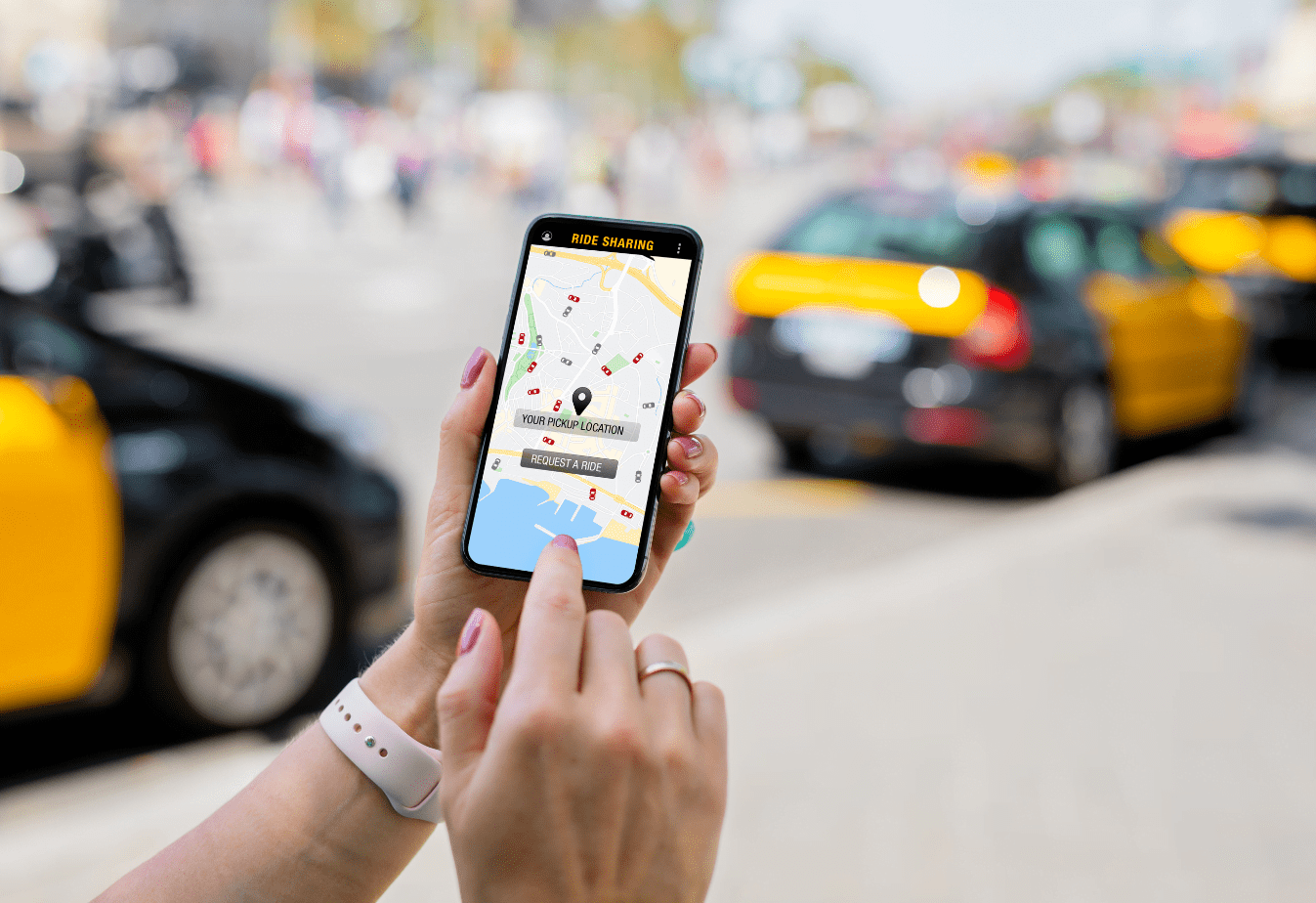
In most cases, no, you can’t sue Lyft directly when one of their drivers causes a crash. But that doesn’t mean you’re out of luck. It just changes how the claim gets filed.
Here’s the workaround: you sue the driver, but the money comes from Lyft’s insurance policy. So even though Lyft’s name isn’t on the lawsuit, their coverage is still paying for your injuries.
If you’ve been hurt in a rideshare accident (whether you were a passenger heading to RTP, a pedestrian in downtown Raleigh, or another driver on I-440), you’re probably not thinking about corporate legal structures. You’re thinking about how to pay for the medical bills that are already piling up.
So why can’t you sue Lyft directly? Because Lyft calls its drivers “independent contractors” instead of employees. That label lets them argue that when a driver runs a red light, it’s the driver’s mistake, not the company’s. It’s a legal shield that protects them from being held responsible for what their drivers do.
This is why how you file the claim matters. By suing the driver, we trigger Lyft’s commercial insurance coverage. In North Carolina, that’s the difference between being stuck with whatever small policy the driver has personally and accessing up to $1 million in coverage that Lyft is required to carry. An experienced Raleigh car accident lawyer can help structure the claim properly to ensure the correct insurance policy applies.
Key Takeaways for Raleigh Lyft Accident Claims
- You must sue the driver to access Lyft’s insurance. Because drivers are independent contractors, a lawsuit against the driver is the legal mechanism required to trigger the company’s mandatory $1 million commercial insurance policy.
- The driver’s app status determines the insurance limits. Coverage ranges from $0 (app off) to $50,000 (app on, waiting for a ride) to $1 million (ride in progress), making the digital evidence of the app’s status at the moment of impact essential.
- North Carolina’s 1% fault rule can bar your claim. Under the pure contributory negligence doctrine, if you are found even slightly at fault for the crash, you may be prevented from recovering any compensation, a tactic adjusters use to deny claims.
The Independent Contractor Shield: Why You Usually Sue the Driver, Not the App
Most people instinctively feel that if a person wearing a Lyft shirt, driving a car with a Lyft sticker, and paid through the Lyft app causes a crash, the company should be responsible. In traditional employment law, this is called respondeat superior (Latin for “let the master answer”). It means an employer is responsible for the actions of employees performed within the scope of their employment.

Lyft, however, has spent millions of dollars in legal fees to ensure this doctrine does not apply to them. They maintain that they are merely a technology platform connecting independent third-party providers (drivers) with consumers (riders). They do not own the cars and they do not dictate specific hours. Therefore, they argue, they are not the “master” of the driver.
The solution requires a strategic approach. We generally file the lawsuit against the driver individually. This may feel counterintuitive because the driver likely does not have the assets to cover a serious spinal injury or traumatic brain injury. However, suing the driver is the key that unlocks the insurance policy.
By structuring the claim correctly from day one, we avoid months of procedural fights over corporate liability and focus on what matters: proving the extent of your injuries and the value of your claim.
Exceptions to the Contractor Defense
This shield is not impenetrable. In California and other jurisdictions, legal battles rage over whether this classification is valid. While North Carolina tends to favor the contractor interpretation, the landscape is shifting. We monitor these changes constantly to see if new case law opens a door to direct corporate liability.
However, for the vast majority of traffic accidents, such as rear-ends, sideswipes, and failure to yield, the path to compensation remains the driver’s liability backed by the company’s insurance.
How the App Status Dictates Your Compensation Limits
One of the most complicated aspects of rideshare litigation is that insurance coverage is not a binary on/off switch. Instead, it operates on a sliding scale depending on the exact digital status of the application at the moment of impact. The difference of a single second, such as the timestamp of when a ride was accepted, can change the available coverage from $30,000 to $1 million.
Period 0: App Off
If the driver has the app closed or is offline, they are effectively just a private citizen. Lyft provides zero coverage during this time.
You must rely entirely on the driver’s personal auto insurance policy. In North Carolina, the minimum liability limits are $30,000 for bodily injury per person and $60,000 per accident. If you have severe injuries, this amount is usually exhausted within the first few days of hospitalization.
Furthermore, many personal insurance policies contain a business use exclusion. If the insurer discovers the driver was technically roaming or acting in a commercial capacity without a rideshare endorsement, they may deny coverage entirely. This leaves you with only your own Uninsured Motorist (UM) policy to fall back on, which is why consulting a Raleigh personal injury lawyer can be important when evaluating all available sources of compensation.
Period 1: App On, Waiting for Ride
This is the most dangerous period for victims financially. The driver has the app open and is waiting for a request but has not yet accepted one. They are technically working, so their personal insurance will likely deny the claim under the commercial exclusion.
Lyft provides a contingent policy during this gap. Currently, the coverage limits are typically:
- $50,000 per person for bodily injury
- $100,000 per accident for bodily injury
- $25,000 for property damage
This is usually insufficient for multi-vehicle accidents or accidents involving serious orthopedic injuries. If a Lyft driver hits a minivan with four people inside while waiting for a ride, that $100,000 cap is split among everyone.
Period 2 & 3: En Route or Passenger in Car
From the moment the driver accepts a ride request (Period 2) until the passenger exits the vehicle and the ride ends (Period 3), Lyft’s full commercial insurance policy is in effect. This policy generally provides $1 million in third-party liability coverage and applies whether you are the passenger in the Lyft, a driver in another car hit by the Lyft, or a pedestrian.
Additionally, this period usually includes Uninsured/Underinsured Motorist (UIM) coverage. If you are a passenger in a Lyft and an uninsured drunk driver hits you, Lyft’s policy steps in to cover your damages up to the policy limit.
The Nuance of Digital Evidence
Disputes frequently arise regarding these periods. A driver might claim they had accepted a ride to secure coverage, while Lyft’s logs show the request hadn’t processed yet. Or, a driver might have cancelled a ride seconds before hitting you, attempting to revert to their personal insurance.
We do not take the adjuster’s word for which period applies. We demand the electronic data logs, including GPS timestamps and server interaction records, to verify the exact status of the app at the moment of the collision.
Exceptions to the Rule: When You Can Sue Lyft Corporate Directly
While you generally cannot sue Lyft for the driver’s bad driving, you can sue Lyft for Lyft’s own bad decisions. This is where we shift the legal theory from vicarious liability (driver’s fault) to direct negligence (company’s fault). These cases bypass the independent contractor shield because they focus on the corporation’s independent duties to the public.
Negligent Hiring and Retention
Lyft has a duty to conduct background checks and ensure their drivers meet safety standards. If the company onboarded a driver who was legally ineligible to drive, perhaps due to a suspended license, a recent history of violent crime, or a string of reckless driving convictions, Lyft itself may be liable.
Similarly, Negligent Retention occurs when Lyft knows a driver is dangerous but keeps them on the platform. For example, if a driver has received five complaints in a month regarding aggressive behavior or intoxication, and Lyft fails to deactivate them, the company may be directly responsible for the subsequent accident.
Negligent Maintenance and Inspection
Rideshare vehicles must meet certain maintenance standards. If a crash is caused by a mechanical failure, such as bald tires or worn brakes, we investigate whether Lyft enforced its inspection policies. If they allowed a vehicle to remain on the platform despite lacking required inspections, the liability may shift up the chain to the corporation.
The Legal Burden of Direct Liability
Proving direct liability is difficult. It requires discovery, a legal phase where we gain access to internal corporate files. We need to see the background check reports, the internal complaint logs, and the algorithm’s deactivation protocols.
These claims are significant because they can open the door to punitive damages. Punitive damages are designed to punish a company for egregious conduct and are generally not covered by standard insurance policies. While rare, these claims are the primary way to hold the corporation accountable for systemic failures that endanger Raleigh residents.
North Carolina’s 1% Rule: The Contributory Negligence Trap
North Carolina is one of only a handful of states that still adheres to the doctrine of pure Rideshare lyft’s insurance coverage. Under this rule, if you are found to be even 1% at fault for the accident, you are barred from recovering any compensation whatsoever. If the Lyft driver was 99% at fault for running a red light, but a jury finds you were 1% at fault for speeding 5 mph over the limit, you get zero.
How Adjusters Use This Against You
Insurance adjusters handling commercial claims are well-versed in North Carolina law. Their investigation will consist of finding any sliver of blame to place on you. They will scour police reports, witness statements, and dashcam footage looking for:
- Speeding: Even minor infractions.
- Distraction: Admitting you were looking at your GPS.
- Failure to avoid: Arguing you should have braked sooner.
Countering the 1% Rule
We counter this by using objective data to prove the Lyft driver was the sole cause of the collision. We may employ accident reconstructionists to show that your speed did not contribute to the crash, or that the accident was inevitable regardless of your reaction time.
We also utilize the legal doctrine of Last Clear Chance. This acts as a rebuttal to contributory negligence. It argues that even if you were negligent, the Lyft driver had the final opportunity to avoid the accident and failed to do so. If we can prove the driver had the last clear chance to prevent the wreck, you can still recover damages despite your contributory negligence.
FAQ for Lyft Accident Lawsuits in Raleigh
What if I was a passenger and my Lyft driver was hit by an uninsured driver?
In this scenario, you are covered by Lyft’s Uninsured Motorist (UIM) policy. Since you were a passenger, the $1 million policy (Period 3) is active. If the at-fault driver has no insurance or flees the scene, Lyft’s insurance steps into the shoes of the at-fault driver and covers your medical bills and pain and suffering.
Can I sue if the Lyft driver assaulted me, rather than crashed?
This is legally distinct from a traffic accident. Insurance policies cover negligence (accidents), but they frequently exclude intentional torts (assault, battery, sexual misconduct). To recover damages here, we typically must sue Lyft directly for negligent hiring or security, arguing they failed to screen a predator. These are complicated, high-stakes cases that differ significantly from standard crash claims.
Does it matter if the Lyft was a rental car (Lyft Express Drive)?
Yes. If the driver was renting a car through Lyft’s Express Drive program (such as via Hertz or Flexdrive), there may be an additional layer of insurance or a self-insured retention involved. The rental agreement complicates liability, but coverage remains available. We simply have to direct the claim to the correct administrator.
Protect Your Right to Compensation After a Rideshare Crash

If you were injured in a Lyft-related accident in Raleigh, do not assume the insurance company will guide you fairly through this process. Getting it right from the start matters. A careful legal review can determine which coverage applies and how to protect your right to recover damages.
Contact Maginnis Howard today to discuss your case and understand your options before evidence or deadlines are lost.