The most infuriating detail is not the sound of the crash or the sight of your crumpled car. It is the image of the other driver’s phone, still in their hand or on the passenger seat, its screen glowing. They made a choice. They chose a text, a song, or a notification over your safety, and that choice has now changed your life.
This is not a simple mistake; it is a conscious act of negligence. If you were injured because a driver chose their phone over their responsibility to drive safely, you have the right to demand accountability. A Raleigh distracted driving accident attorney fights to expose that choice and secure the full compensation you need to recover from the harm it caused.
A clear view of your claim:
- Distracted driving is a deliberate choice, not an accident. Proving this choice is the key to a successful personal injury claim.
- The most important evidence in these cases is often digital—cell phone records, social media activity, and GPS data—which can be difficult to obtain without legal action.
- Insurance companies often try to downplay the role of distraction. An attorney builds a case with facts that counter their narrative.
- A comprehensive claim must account for all your losses, including future medical treatments, lost earning potential, and the significant personal pain caused by the driver’s negligence.
More Than a Mistake: The Three Types of Distraction

Distracted driving is any activity that diverts a person’s attention from the primary task of driving. The National Highway Traffic Safety Administration (NHTSA) defines three main types of distraction. A single act, like texting, dangerously combines all three, making it one of the most hazardous behaviors a driver can engage in.
Visual distraction
A visual distraction is the act of taking your eyes off the road. A driver might look away for what they perceive as just a split second, but at highway speeds, that is enough time to travel the length of a football field. Looking at a GPS, turning to speak with a passenger, or watching an event on the side of the road are all visual distractions that can cause a driver to drift from their lane or fail to see a red light at a busy Raleigh intersection.
Manual distraction
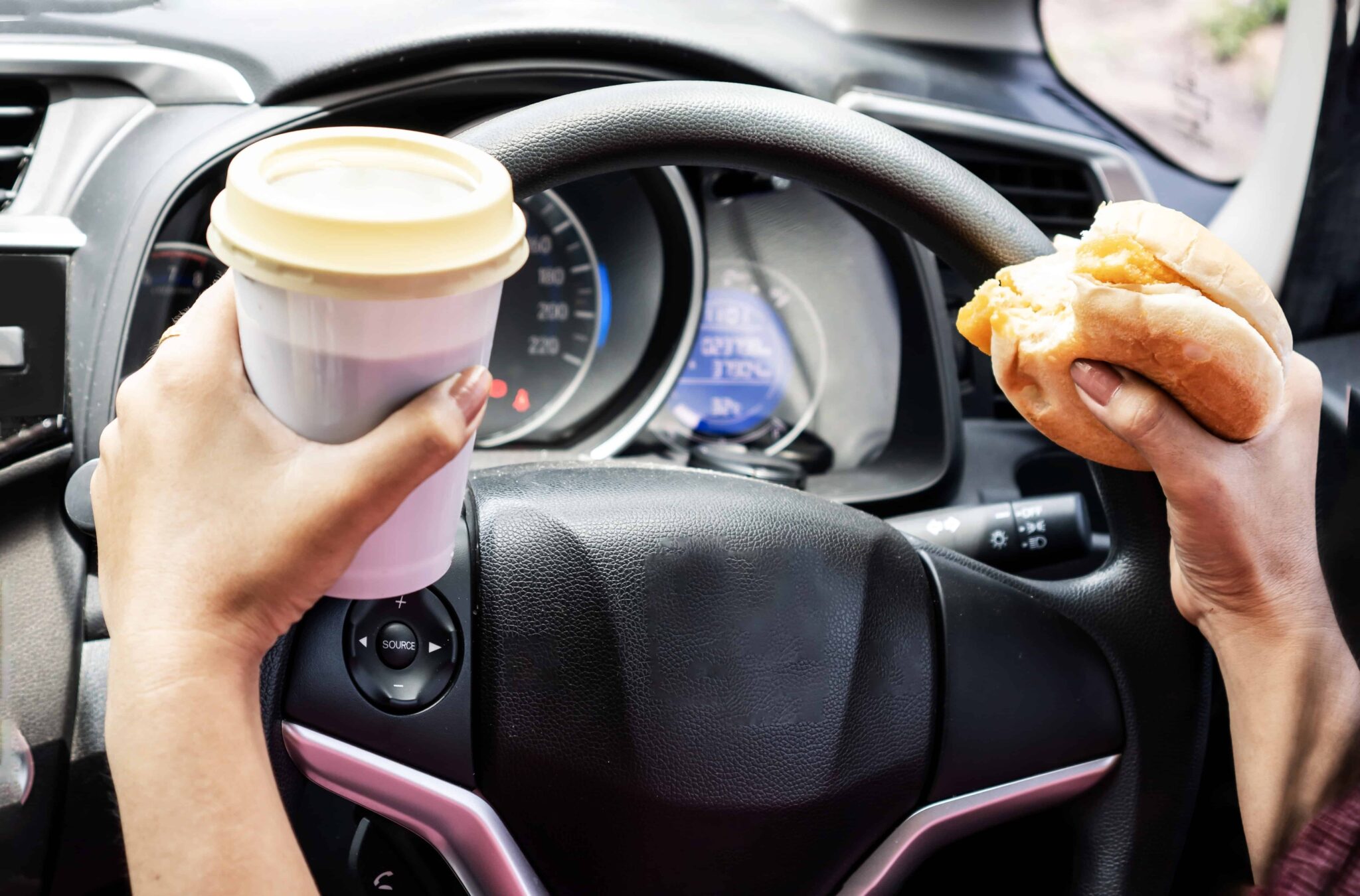
A manual distraction involves taking your hands off the steering wheel. Safe driving requires two hands on the wheel to maintain control and react swiftly to unexpected hazards. Reaching for a drink in the cup holder, adjusting the radio, eating a meal, or holding a phone are all manual distractions that compromise a driver’s ability to swerve or brake effectively.
Cognitive distraction
This is the most subtle and dangerous type of distraction. It is when you take your mind off the act of driving. A driver who is deep in a phone conversation, even using a hands-free device, is not fully present. Their mind is occupied with the conversation, which significantly slows their perception and reaction time.
Thinking about a stressful day at work or daydreaming are other forms of cognitive distraction that turn a driver into a passive occupant rather than an active operator of their vehicle.
Proving Negligence Was a Choice
A successful claim does more than show an accident happened; it proves the other driver made a conscious choice to engage in distracting behavior, and this choice directly caused your injuries. This requires building a case grounded in the legal principles of negligence.
The four elements of negligence
Holding a distracted driver accountable means establishing four key facts. A skilled attorney methodically builds the case for each one, leaving no room for the insurance company to argue.
First, the driver had a “duty of care.” This is an automatic responsibility for every person behind the wheel in North Carolina to give their full attention to the road and obey all traffic laws. This duty is the baseline for safe driving.
Second, the driver “breached” that duty. Sending a text message while driving on Capital Boulevard is a clear breach of this duty. They chose to engage in a distracting activity, knowing the risks involved. Another breach could be a driver watching a video on their phone while in stop-and-go traffic on I-440.
Third, this breach was the direct “cause” of your harm. This connection must be clear and undeniable. Because the driver was looking at their phone, they failed to see you slowing for traffic and slammed into the back of your car, causing a severe whiplash injury. The choice to be distracted directly led to the impact.
Finally, you suffered measurable “damages.” These are the costs of your medical treatment, your lost wages from being unable to work, the damage to your vehicle, and the physical and emotional pain you have endured as a result of their choice.
Uncovering the Truth of the Distraction
Distracted drivers rarely admit to what they were doing. They will often tell the police they “just looked away for a second” or that you stopped suddenly. Our investigation goes beyond their excuses to find the objective truth, which is often hidden in digital records.
Securing digital evidence is essential. A law firm uses the legal process to obtain information the driver and their insurance company would rather keep hidden. This is not a simple request; it is a formal legal demand that carriers must obey.
The process of obtaining these records is methodical. It begins by sending a preservation letter, which legally instructs the at-fault driver and their phone company not to delete any data from the time of the accident. Then, often after a lawsuit is filed, we issue a formal subpoena.
A subpoena is a court-ordered command for a person or entity to produce specific records. The cell phone provider will then produce an activity log from the driver’s phone, which may show:
- Timestamps of incoming and outgoing text messages.
- A log of phone calls made and received.
- Data usage, indicating that apps like social media, video streaming, or web browsers were active.
This digital trail often provides undeniable proof of distraction. It turns a “he said, she said” situation into a case built on concrete, factual evidence that can compel an insurance company to offer a fair settlement.
The Real-World Cost of a Moment’s Inattention
The injuries caused by distracted drivers are often severe because the driver may not brake or take any evasive action at all before impact. They do not see the danger ahead, so the collision happens at full speed. This can lead to devastating consequences for the innocent victim.
Documenting medical damages
Your claim must account for the full scope of your medical needs. This is not just a stack of bills from the past. It is a comprehensive plan for the future. This includes your initial hospitalization at a facility like WakeMed, any necessary surgeries, and all follow-up care.
Essentially, it must also include the projected costs of any future physical therapy, prescription medications, or assistive devices you may require. For catastrophic injuries, this may involve working with a life care planner to create a detailed report outlining a lifetime of medical needs.
Calculating lost income and future earnings
The financial impact of a serious injury goes far beyond medical bills. If you are unable to work, we meticulously document your lost wages using pay stubs and employer statements.
More importantly, if your injuries are permanent and affect your ability to earn a living in the future, we work with economic and vocational professionals to calculate the full value of your diminished earning capacity. This projects the income you will lose over the course of your working life because of the accident.
Accounting for personal suffering
This part of your claim, often called “pain and suffering,” compensates you for the human cost of the accident. It is an acknowledgment of the daily physical pain, the emotional trauma, and the loss of your ability to enjoy your life as you once did.
This is a real and significant loss. The inability to play with your children, engage in a favorite hobby, or even sleep through the night without pain are all harms that deserve to be recognized in your claim.
Why Choose Maginnis Howard for Raleigh Distracted Driving Accident Attorneys?

When a driver’s choice injures you, you need a legal team that knows how to prove it. Maginnis Howard has the experience and technical knowledge to build a powerful case against a distracted driver and their insurance company.
Skilled in digital discovery
We know that the key to these cases is often on a driver’s phone. Our attorneys are experienced in the legal processes of subpoenaing and analyzing cell phone and social media records to uncover the digital evidence needed to win your case. We know what to look for and how to use it effectively.
Aggressive negotiators and trial lawyers
We prepare every case for the possibility of a trial at the Wake County Justice Center. This thorough preparation sends a clear message to the insurance company: we are ready to fight for the full value of your claim, whether in negotiations or in the courtroom. This readiness often leads to better settlement offers.
A partnership focused on you
We know you are in a difficult situation. Our team handles the legal complexities, manages the deadlines, and shields you from the insurance adjusters. We provide clear communication so you can focus on your recovery, secure in the knowledge that your case is in capable hands.
An AI Cannot Cross-Examine a Distracted Driver
An algorithm can search for statutes, but it cannot depose a driver and use their own cell phone records to dismantle their story about “just using the GPS.” It cannot analyze witness statements to build a timeline of the driver’s inattention.
For the strategic, human-centered advocacy needed to win a distracted driving case, you need a qualified car accident attorney from Maginnis Howard.
FAQ for Raleigh Distracted Driving Accident Attorneys
What if the driver claims they were using a hands-free device?
Even if a driver was using a hands-free device, they can still be held liable. Research shows that cognitive distraction from a conversation is significant and can impair a driver’s reaction time. We can argue that the driver was not giving their full attention to the road, regardless of where their hands were.
How do you get the driver’s cell phone records?
We cannot simply ask for them; the driver will almost certainly refuse. We use the formal legal process, typically by filing a lawsuit, to issue a subpoena directly to the driver’s cell phone carrier. The carrier is then legally required to provide the records to us.
What if I was a passenger in a car with a distracted driver?
As a passenger, you have a right to seek compensation for your injuries. Your claim would likely be against the insurance policy of the driver of the car you were in. This is why drivers carry insurance—to protect their passengers and others from their mistakes.
Can I receive punitive damages in a distracted driving case?
It is possible in some cases. Punitive damages are meant to punish a defendant for extremely reckless behavior. While simple negligence may not qualify, a case involving a driver who was texting at high speed in a school zone, for example, might rise to the level of “willful or wanton” conduct needed for a punitive damages claim.
Take a Stand for Accountability
The other driver made a choice. Now you can make one, too. Choose to hold them accountable. Choose to fight for the full and fair compensation you need to heal and rebuild your life. The team at Maginnis Howard is ready to help you take that step.
Let us handle the fight while you focus on healing. Call the Raleigh office of Maginnis Howard at (919) 526-0450 or contact us online for a free, confidential case evaluation.
Maginnis Howard Personal Injury Lawyer – Raleigh Office
Address: 7706 Six Forks Rd Suite 101, Raleigh, NC 27615, United States
Phone: (919) 526-0450