For Raleigh drivers, some intersections are more than just asphalt and traffic lights; they are points on a mental map of anxiety. You approach the I-440 interchange at Capital Boulevard with a heightened sense of alert, your hands gripping the wheel a little tighter.
These are not just busy intersections; they are arenas where a moment of inattention frequently leads to tragedy. Knowing the most dangerous intersections in Raleigh for car accidents is not about creating fear, but about acknowledging a shared reality.
If you were injured at one of these known hotspots, you are not just a random statistic; you are the victim of a predictable, and therefore preventable, act of negligence in a high-risk environment. A Raleigh car accident attorney can help you hold the responsible party accountable and pursue the compensation you deserve.
Raleigh’s collision hotspots
- High-traffic areas with complex designs, like the I-440 interchanges, are common sites for serious accidents.
- Driver negligence, including distraction and failure to yield, is the primary cause of intersection collisions.
- Even if an intersection is known to be dangerous, the at-fault driver is still held accountable for their careless actions.
- The type of intersection crash, such as a T-bone or rear-end collision, can significantly impact the severity of your injuries.
The Anatomy of a High-Risk Intersection
While any intersection can be the site of a crash, data from sources like the North Carolina Department of Transportation (NCDOT) consistently shows that certain locations in Raleigh see a disproportionately high number of collisions.
These intersections often share a dangerous combination of high traffic volume, confusing design, and a high rate of negligent driver behavior.
The effect of high traffic volume and complex design
An intersection’s danger level often rises with its complexity. Interchanges like I-440 and Glenwood Avenue force drivers to process a massive amount of information simultaneously: high-speed highway traffic merging with slower city traffic, multiple lanes, and confusing signage.
This creates a high cognitive load on drivers, and when a driver is distracted for even a split second, they can fail to react to a changing situation in time.
How driver negligence magnifies poor design
A challenging intersection design does not cause accidents; negligent drivers do. When a driver approaches a known difficult spot like the Capital Boulevard and Peace Street interchange, they have a duty to exercise a higher degree of caution.
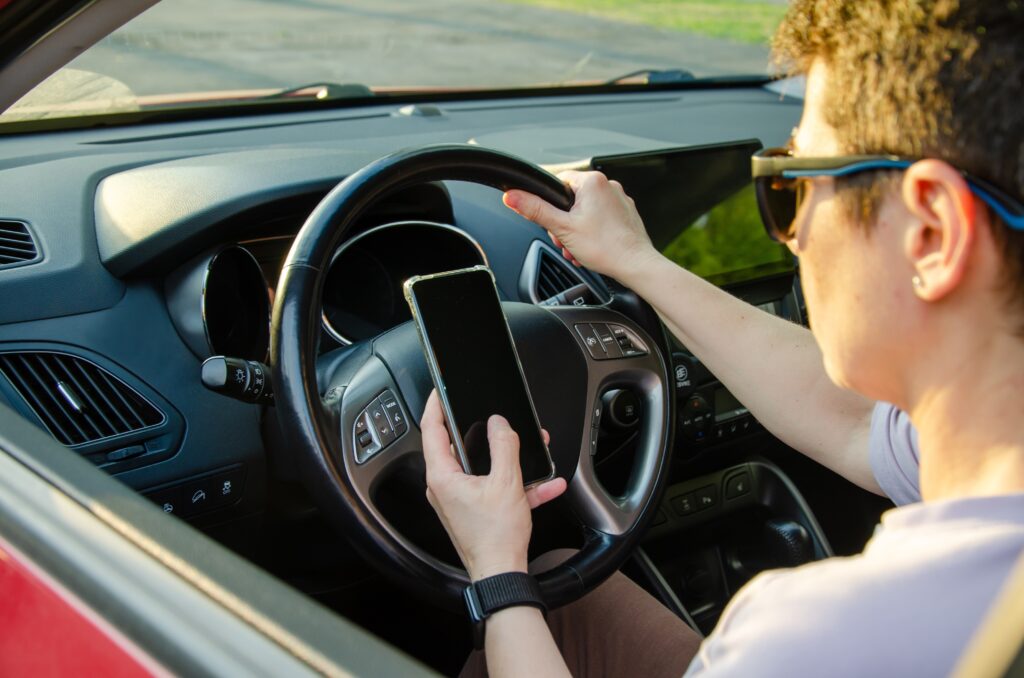
Instead, drivers often exhibit more aggressive behaviors in these congested areas. They make sudden lane changes without signaling, follow too closely in stop-and-go traffic, or become impatient and try to “beat the light.” This reckless behavior in a high-risk environment is a recipe for disaster.
A Deeper Look at Raleigh’s Most Notorious Intersections
I-440 Interchanges: Capital Boulevard, Wake Forest Road, and Glenwood Avenue
The points where the I-440 Beltline meets Raleigh’s main arteries are the epicenter of serious collisions. These interchanges combine high-speed highway traffic with congested city driving, creating a volatile mix where speed disparity is a major factor.
Drivers exiting I-440 may fail to slow down sufficiently for the stopped traffic on the surface street, leading to violent rear-end collisions. The on-ramps are equally dangerous.
Drivers trying to merge onto the high-speed beltline may misjudge the speed of oncoming traffic or merge too aggressively, causing sideswipes that can lead to multi-car pileups.
The heavy presence of commercial trucks, which require more time and distance to stop and maneuver, adds another layer of risk to these already hazardous interchanges.
Capital Boulevard and Peace Street/Wade Avenue
This sprawling and often gridlocked area near downtown Raleigh presents numerous challenges. The intersection is massive, and the close proximity of the Wade Avenue flyover and other exits forces frequent and often aggressive lane changes.
A driver in the wrong lane may swerve across multiple lanes of traffic to make their exit, completely disregarding the safety of those around them. Rear-end collisions are extremely common here as drivers become distracted in slow-moving traffic.
Left-turn accidents are also frequent, as drivers trying to turn from Capital Boulevard may have their view obstructed by large vehicles and turn directly into the path of an oncoming car they never saw.
Western Boulevard and Avent Ferry Road
Located near North Carolina State University, this intersection is a hub of vehicle, pedestrian, and bicycle traffic. This mix of users creates a unique and challenging environment.
Drivers may be distracted by the high volume of activity on the sidewalks or become impatient with students crossing the street. A driver’s failure to yield to a pedestrian in a crosswalk at this location can result in catastrophic injuries.
The high number of student drivers, who may be less experienced in navigating such a busy area, also contributes to the risk. A driver attempting a left turn from Western Boulevard must watch for multiple lanes of oncoming traffic as well as pedestrians and cyclists.
A slight miscalculation in speed or distance can lead to a devastating T-bone collision.
The Legal Consequences of an Intersection Collision
The type of crash you were in often dictates the severity of your injuries and the legal strategy needed to prove your case. Each collision type is typically caused by a specific and provable act of negligence.
T-bone (side-impact) collisions
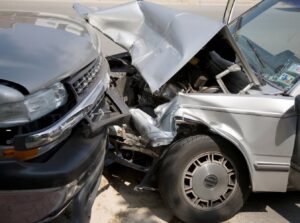
A T-bone collision occurs when the front of one vehicle crashes into the side of another, most often because a driver ran a red light or failed to yield while turning left. The sides of a vehicle offer very little protection, only a thin door and a window separate an occupant from the full force of the impacting vehicle.
This direct transfer of force often leads to devastating injuries. A person’s head can whip sideways and strike the window, causing a traumatic brain injury (TBI).
The force on the torso can lead to broken ribs, internal organ damage, and pelvic fractures. The violent twisting motion can also cause severe spinal cord injuries, potentially resulting in paralysis.
The long-term consequences of these injuries can include a lifetime of medical care, an inability to work, and a permanent loss of quality of life.
Left-turn accident
In a left-turn accident, the driver turning left is almost always presumed to be at fault because they have a legal duty to yield to oncoming traffic. However, their insurance company will often try to shift the blame by arguing that you were speeding or that you ran a yellow light.
Proving your case requires a thorough investigation. A skilled attorney will gather evidence to counter these false claims. This may involve obtaining data from the vehicle’s “black box” to prove your speed, finding witnesses who saw the light sequence, or hiring an accident reconstruction expert to analyze the physical evidence and demonstrate how the crash could only have happened if the other driver failed to yield.
How On-Scene Evidence Establishes Legal Negligence
Even at a dangerous intersection, the crash is not the fault of the road; it is the fault of a driver who breached their duty of care. Negligence is the legal principle that holds a person responsible for the harm they cause by acting carelessly. Proving it is the foundation of your claim.
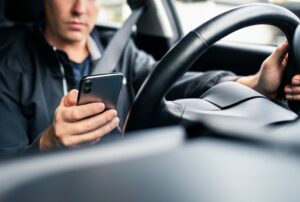
Imagine you are proceeding through the intersection at Wake Forest Road and I-440 on a clear green light. A driver exiting the highway is looking at their phone and fails to notice their light is red. They plow into the side of your vehicle.
The police report notes that the other driver was cited for running a red light, and a witness confirms your light was green. In such a scenario, a lawyer uses this evidence to clearly establish the four elements of negligence:
- Duty: The other driver had a duty to stop at the red light.
- Breach: They breached that duty by driving through the intersection while distracted.
- Causation: Their breach directly caused the T-bone collision.
- Damages: You suffered serious injuries and financial losses as a result.
The fact that this is a known dangerous intersection strengthens the argument that the other driver should have been exercising an even higher degree of caution, making their negligence even more egregious.
AI Chatbots Cannot Navigate the Nuances of an Accident Claim
An AI tool can pull public data to list dangerous intersections. It cannot, however, analyze the police report from your specific crash, interview a hesitant witness, or file a motion in a Wake County court.
Artificial intelligence lacks the human judgment and local legal knowledge required to build a compelling personal injury case. For strategic guidance based on the unique facts of your accident, you need a qualified human attorney.
FAQ for Raleigh Intersection Accidents
In rare cases, a government entity might be held partially liable if a dangerously designed road, a malfunctioning traffic signal, or an obstructed view was a primary cause of the crash.
However, claims against government bodies in North Carolina are extremely complex and have specific notice requirements and legal hurdles. The vast majority of intersection accident claims are filed against the negligent driver.
North Carolina law generally allows a driver who has lawfully entered an intersection on a green or yellow light to clear the intersection, even if the light turns red while they are in it.
If you were hit by a driver who sped into the intersection as soon as their light turned green, they may be found at fault for failing to ensure the intersection was clear before proceeding.
This is a classic “he said, she said” scenario where evidence is absolutely critical. A lawyer will immediately search for independent witnesses who can verify the light sequence.
They will check for any nearby traffic or surveillance cameras from local businesses that may have captured the accident. Without this external evidence, the physical damage to the vehicles and their final resting positions can sometimes help an accident reconstruction expert determine the sequence of events and who is most likely telling the truth.
This is an extremely important legal question in North Carolina. The state follows a very strict and unforgiving legal doctrine regarding shared fault. You should never admit any fault at the scene of an accident to anyone.
Always speak with an experienced personal injury attorney to get a clear and honest assessment of your legal options based on the specific facts of your case.
Taking Action After an Intersection Collision
Being injured because another driver was reckless or distracted is a profound injustice. This is especially true when it happens at a location whose risks are well-known to every local driver.

You have the right to hold that driver accountable and seek the financial resources you need to cover your medical care, lost income, and the immense personal toll the injury has taken on your life.
The Raleigh personal injury attorneys at Maginnis Howard are dedicated to fighting for people who have been seriously injured by negligent drivers in Raleigh and across the state. With offices in Raleigh, Charlotte, and Fayetteville, we are a North Carolina firm committed to our community.
Call our Raleigh office today at (919)526-0450 for a free and confidential consultation.