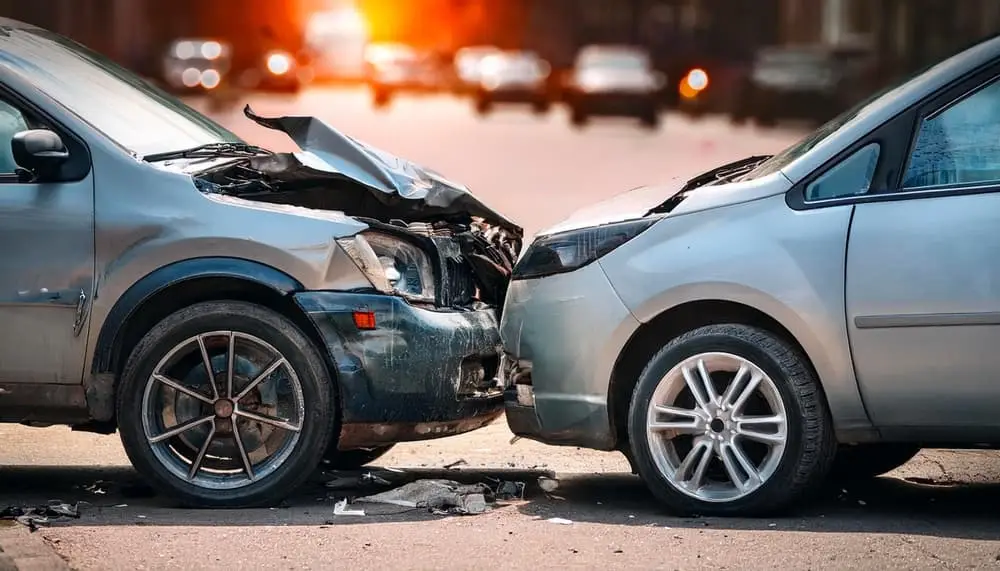
In our practice, the most dangerous intersections for car accidents in Raleigh include:
- Buffaloe Road at New Hope Road. Consistently ranked the most dangerous intersection in the city. Limited visibility and heavy traffic lead to frequent left-turn collisions.
- Capital Boulevard (US 1) at Peace Street, Wade Avenue, and New Hope Road. High-speed commuter traffic mixes with stop-and-go retail traffic, creating rear-end and sideswipe crashes.
- Glenwood Avenue at Creedmoor Road. Confusing turn lanes near Crabtree Valley Mall cause drivers to drift out of their lane, often sideswiping the car next to them.
- I-440 interchanges at Capital Boulevard and Wake Forest Road. Merging and exiting traffic creates speed mismatches that lead to collisions.
If you’ve been in a recent car accident in any of these locations, you will have to prove the other driver was at fault. The difficulty here is that the insurance company will look for any way to argue you share the blame.
That matters more here than in almost any other state, as North Carolina follows a rule called contributory negligence. If the insurance adjuster can argue you were even 1% responsible for the crash, you could be barred from recovering anything.
If you were hurt at one of these intersections and you’re not sure where you stand, speaking with a Raleigh car accident attorney at Maginnis Howard can help clarify your options. We’ll review the police report and tell you whether the evidence supports a valid claim.
Key Takeaways for Raleigh Intersection Accidents
- North Carolina’s contributory negligence law can bar you from compensation if you are found even 1% at fault. This makes it vital to counter any arguments from insurance adjusters that you share blame for the collision.
- Objective data like traffic signal logs, black box data, and forensic mapping is more powerful than witness statements. This evidence is time-sensitive, so a prompt investigation is necessary to prove the other driver was negligent.
- Even if an intersection is known to be dangerous, liability still focuses on individual driver actions and their duty of care. We use the road’s design to defend against claims of your negligence, not as the primary basis for a claim against the city.
The High-Risk Corridors: Where Raleigh Crashes Happen Most
Traffic volume in the Triangle has exploded, but the infrastructure hasn’t always kept pace. Fatal accidents in Raleigh have remained stubbornly high, despite advancements in vehicle safety technology. We frequently see collisions in the following areas.
Buffaloe Road at New Hope Road
This intersection has historically ranked as the #1 most dangerous spot in Raleigh. It is a classic example of high-volume, low-visibility conditions, where drivers attempt to turn left into heavy traffic, frequently misjudging the gap. When a crash occurs here, the dispute typically centers on who had the right of way and if the oncoming driver was speeding, thereby shortening the gap for the turning driver.
Capital Boulevard (US 1) Corridor
Capital Boulevard is essentially a highway functioning as a city street. The mix of high-speed commuting traffic and stop-and-go retail traffic creates a volatile environment. Specifically, the intersections at Peace Street, Wade Avenue, and farther north at New Hope Road are hotspots.
The danger here lies in the speed variance. One lane might be moving at 50 mph while the adjacent lane is stopped for a turning vehicle. Rear-end collisions and side-swipe accidents are common here. Proving fault requires analyzing lane assignment and whether a driver made an unsafe lane change to avoid slowing down.
Glenwood Avenue at Creedmoor Road
This area near Crabtree Valley Mall is a major bottleneck. The confusing turning lanes can confuse drivers who are not locals.
We frequently handle cases where a driver drifts out of their designated turn lane, sideswiping the vehicle next to them. Disputes here usually rely on physical evidence like paint transfer to determine who left their lane.
I-440 Interchanges
The interchanges at Capital Boulevard and Wake Forest Road present a specific Speed Disparity Problem. Drivers merging onto the Beltline must accelerate rapidly, while those exiting must decelerate. Collisions happen when a driver on the highway refuses to let a merging vehicle in, or when a merging driver fails to yield. These cases typically hinge on the specific right-of-way statutes governing merging traffic.
Common Intersection Crash Types and Proving Fault
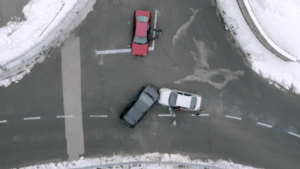
The type of collision you experienced gives us a blueprint for the investigation. We look for specific patterns of negligence depending on how the cars hit.
Left-Turn Collisions (The Yield Crisis)
These are among the most common and severe accidents. Under North Carolina law, the driver turning left across traffic must yield to oncoming vehicles. If a crash happens, the turning driver is generally presumed to be at fault.
However, the turning driver frequently defends themselves by claiming the oncoming driver (you) ran a red light or was speeding. To protect your claim, we must disprove this allegation.
We analyze the scene for skid marks and impact angles. If physics shows you were traveling at the speed limit, the turning driver’s defense collapses.
T-Bone / Side-Impact Crashes
Side-impact crashes are physically devastating because vehicles have limited crumple zones on the doors. These almost always involve a red-light runner. The dispute often boils down to both drivers claiming they had the green light.
This is where speed in securing evidence matters. We immediately look for business security cameras, such as those from strip malls on Capital Blvd, and third-party witnesses. Memory fades quickly, and security footage is typically overwritten within days, so securing this footage is a priority for our team.
Rear-End Collisions at Yield Signs/Highways
These occur frequently at I-440 exit ramps where drivers must yield to oncoming traffic. A common scenario is the false start where the driver in front starts to go, then stops suddenly because it isn’t safe. The driver behind them is looking left at traffic, assumes the front car went, and accelerates into them.
While the rear driver is usually liable for following too closely, difficult merging scenarios can sometimes shift liability. If a driver cuts you off aggressively, creating a sudden emergency, the fault calculation might change.
The Role of Road Design vs. Driver Negligence
Clients frequently ask us if they can sue the City of Raleigh or NCDOT because a stop sign was obscured or a light was poorly timed. It may be possible, but these claims face high hurdles.
Government Liability is Rare
To win a claim against a municipality, you generally must prove gross negligence. This means the city knew about a specific, dangerous defect (like a broken traffic light reported multiple times) and refused to fix it for an unreasonable amount of time. Mere poor design is usually not enough to overcome this high hurdle.
Poor Design as a Factor, Not an Excuse
Even if the intersection is poorly designed, the primary focus remains on the drivers. For example, if a lane ends abruptly on Wade Avenue, a driver still has a duty to merge safely. They cannot simply drift into your car and blame the road.
However, road conditions are part of the context. If signage was missing or lane markings were completely faded, we use that to defend you against allegations of contributory negligence in North Carolina. We argue that a reasonable person could not have known which lane to be in, thereby mitigating any claim that you were at fault.
Specific Risks: Pedestrians, Cyclists, and Commercial Trucks
Certain road users face unique risks at Raleigh intersections. The rules of engagement change slightly when heavy machinery or vulnerable pedestrians are involved.
Vulnerable Road Users
Areas near NC State, such as Western Boulevard at Avent Ferry, see heavy foot and bicycle traffic. Pedestrians in marked crosswalks have the right of way. Yet, accidents happen frequently because drivers turning right on red fail to look for walkers.
Unfortunately, bias against cyclists sometimes creeps into police reports. An officer might assume a cyclist darted out. We work to correct the record using physical evidence and bystander video to show the cyclist was obeying traffic laws.
Commercial Vehicle Complications
Trucks on Capital Blvd and I-440 behave differently than sedans. A fully loaded tractor-trailer cannot stop quickly at a yellow light. If a truck barrels through a red light and hits you, the trucking company might claim brake failure or a sudden emergency.
We also see squeeze play accidents where trucks make wide right turns. They swing left to clear the curb, and a car tries to pass them on the right. If the truck driver failed to signal properly or check their mirrors, they are liable. Furthermore, liability may extend to the trucking company if they pushed the driver to speed through a known congested corridor to meet a delivery window.
FAQ: Navigating Intersection Claims in Raleigh
What if the traffic camera shows the other driver ran the red light?
Be aware that most cameras you see at Raleigh intersections are for monitoring traffic flow, not recording video footage. They do not store data. However, red-light enforcement cameras (where active) or private business cameras might have footage. We send preservation letters to secure this evidence before it is deleted.
Can I claim against the city if a pothole or overgrown bush caused the crash?
It is possible but requires strict procedural steps. You must prove the city had prior notice of the defect and failed to act. There are also very short deadlines for filing notice of a claim against a government entity, typically much shorter than the standard three-year injury statute of limitations.
The other driver says I was speeding through the intersection. Does that ruin my case?
It creates a challenge due to North Carolina’s contributory negligence rule. If a jury finds you were speeding and that speed contributed to the crash, you could be barred from recovery. We focus on forensic data to disprove speed allegations or argue that your speed was not a proximate cause of the accident.
What if the police report says “unable to determine fault”?
The police report is an important document, but it is not the final verdict in a civil claim, as officers are not always accident reconstructionists. If the report is inconclusive, we conduct our own investigation, interview witnesses, and analyze physical damage to help determine fault and build a case for liability that the officer might have missed.
I was hit by an uninsured driver at a major intersection. Now what?
You may need to file a claim under your own Uninsured Motorist (UM) coverage. This coverage acts as the other driver’s insurance. Your own rates generally should not rise for a not-at-fault accident. We handle UM claims to ensure your own carrier treats you fairly.
Don’t Let the Adjuster Get the Final Word
If you’ve been injured at any of these intersections, call Maginnis Howard for a free consultation today.
Fault is frequently disputed at these locations, so consulting a personal injury lawyer can help you understand your legal options. We will evaluate the accident report and tell you plainly whether you have a viable claim for damages.